

Behind the Curtain: Straight Up Shakespeare
By Kamilah Bush
Shakespeare’s Hamlet, likely written around 1600, is one of the theater’s most enduring works having been translated into 75 languages, adapted countless times and turned into more than 50 films. James Ijames’ Pulitzer Prize winning redux Fat Ham, stands both in its timeless tradition and forges a path all its own. As Ijames states:
“I wanted to play with Shakespeare, if that makes sense. When I say “play with Shakespeare,” I mean in the sense of like “Do you want to go outside and play?” I wanted to…see if it would be fun to put something that I wrote right next to something that he wrote and that those things would flow one into the other. And they do.”
In Fat Ham two of Shakespeare’s speeches appear mostly unedited from Hamlet. In an interview for the Folger Shakespeare Library’s podcast Shakespeare Unlimited (Episode 207) Ijames speaks of these additions like an artist samples a piece of music: “They’re taking it out of its original context and putting it into something utterly new to make something new.”
One such sampling, the infamous “Play’s the Thing” speech from Act 2 Scene 2, appears not before a play but before a spirited game of charades with similar intentions as in Shakespeare’s tale. The other, also from Act 2 Scene 2, “What a Piece of Work is Man”, however, finds itself recontextualized and utterly new. Of this Ijames says:
“It’s not really about romance at all…and yet it comes on the heels of this scene in Fat Ham that is all about that…I haven’t changed any of the language there — but it all takes on a different meaning because of the context that I’ve placed it.”
There are other lines in Fat Ham taken as James Ijames says “whole hog…pun intended” from Hamlet. Though centuries, cultures and contexts separate these two pieces, Shakespeare’s enduring language and Ijames’ deft storytelling connect Juicy and Hamlet by shared speech and similar circumstances.
Need a refresher on all things Hamlet? Below is a summary of the Bard’s original work:
A Ghostly Visit
The play begins with Hamlet, the Prince of Denmark and Horatio, a scholar, being visited by a ghost resembling Hamlet’s recently-deceased father and former king. The ghost tells Hamlet that the king was murdered by Claudius, Hamlet’s uncle, who then ascended to the throne and married the widowed Queen, Hamlet’s mother, Gertrude. The ghost implores Hamlet to avenge the king’s death by killing Claudius. Dealing with the grief from the sudden loss of his father, and the uncertainty of whether he should follow the ghost’s commands, Hamlet struggles to take immediate action.
Hamlet’s Heart
Concerned by Hamlet’s erratic behavior, Gertrude and Claudius send his friends — Rosencrantz and Guildenstern — to look after him. Ophelia, the Lord Polonius’ daughter, has been in love with Hamlet but their relationship suffers under the weight of Hamlet’s grief. Heartbroken over this, and the murder of her father at Hamlet’s hands, Ophelia eventually dies by suicide.
The Play’s the Thing
A group of traveling actors arrive and Hamlet employs them in a test for his uncle — they are to perform a play which resembles the story of his father’s murder in hopes that it will reveal Claudius’ guilt. Claudius responds to the play by storming out and Hamlet takes this as admission but when he goes to take his chance to kill, he finds his uncle praying. Afraid that killing him in prayer would send Claudius’ soul to heaven, Hamlet decides to wait.
A Tragic End
Fearing for his life, Claudius sends Hamlet to England with Rosencrantz and Guildenstern, with orders for him to be killed. Hamlet escapes and switches his death order for those of his companions. When he returns to Denmark, Polonius’ son Laertes has also returned from France with the intention of avenging his father. In a plot with Claudius, Laertes attempts to kill Hamlet with a poison dipped sword. Claudius also keeps a poisoned drink nearby in case their plan fails. In the fight, both Hamlet and Laertes are wounded by the sword and before Laertes dies, he forgives Hamlet. Gertrude accidentally drinks from the poisoned cup and Hamlet stabs Claudius and forces him to finish the drink. In Hamlet’s final moments, having gotten his revenge, he stops Horatio from dying by suicide by begging him to stay alive and tell his tale.
More about Fat Ham:
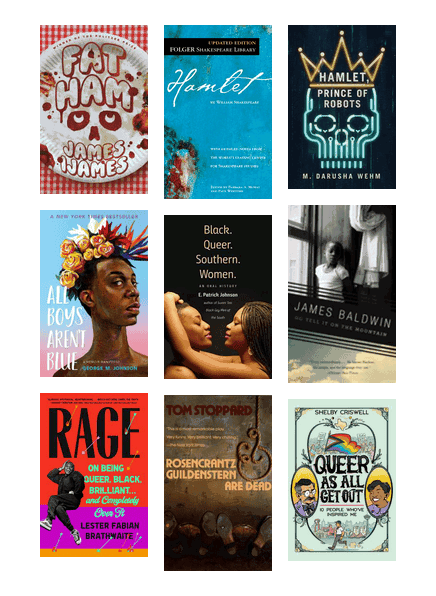
Multnomah County Library My Discovery Pass Reading List
Enjoy a thoughtfully curated list of readings to complement your Fat Ham experience!

Portland Center Stage and Portland Playhouse Team up To Serve FAT HAM
Portland Mercury's Joe Streckert discusses the co-production between Portland Center Stage and Portland Playhouse with PCS's Marissa Wolf and PPH's Producing Director (and Fat Ham Director) Charles Grant. Artwork by Harrison Freeman.
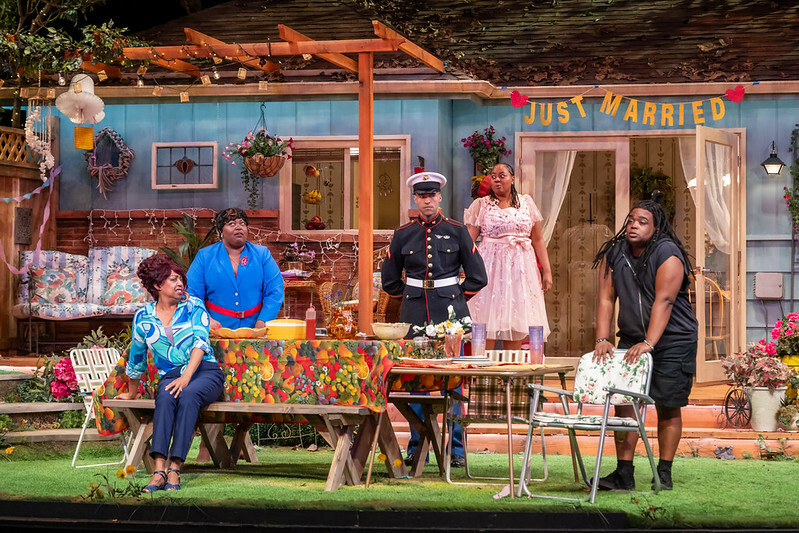
‘Fat Ham’ is ‘Hamlet’ in a backyard with barbecue, karaoke and, of course, a ghost
Fat Ham reimagines Shakespeare's tragedy as a backyard barbecue where Juicy, a young queer Black man, must decide whether or not to listen to his father's vengeful ghost at The Armory through May 17.
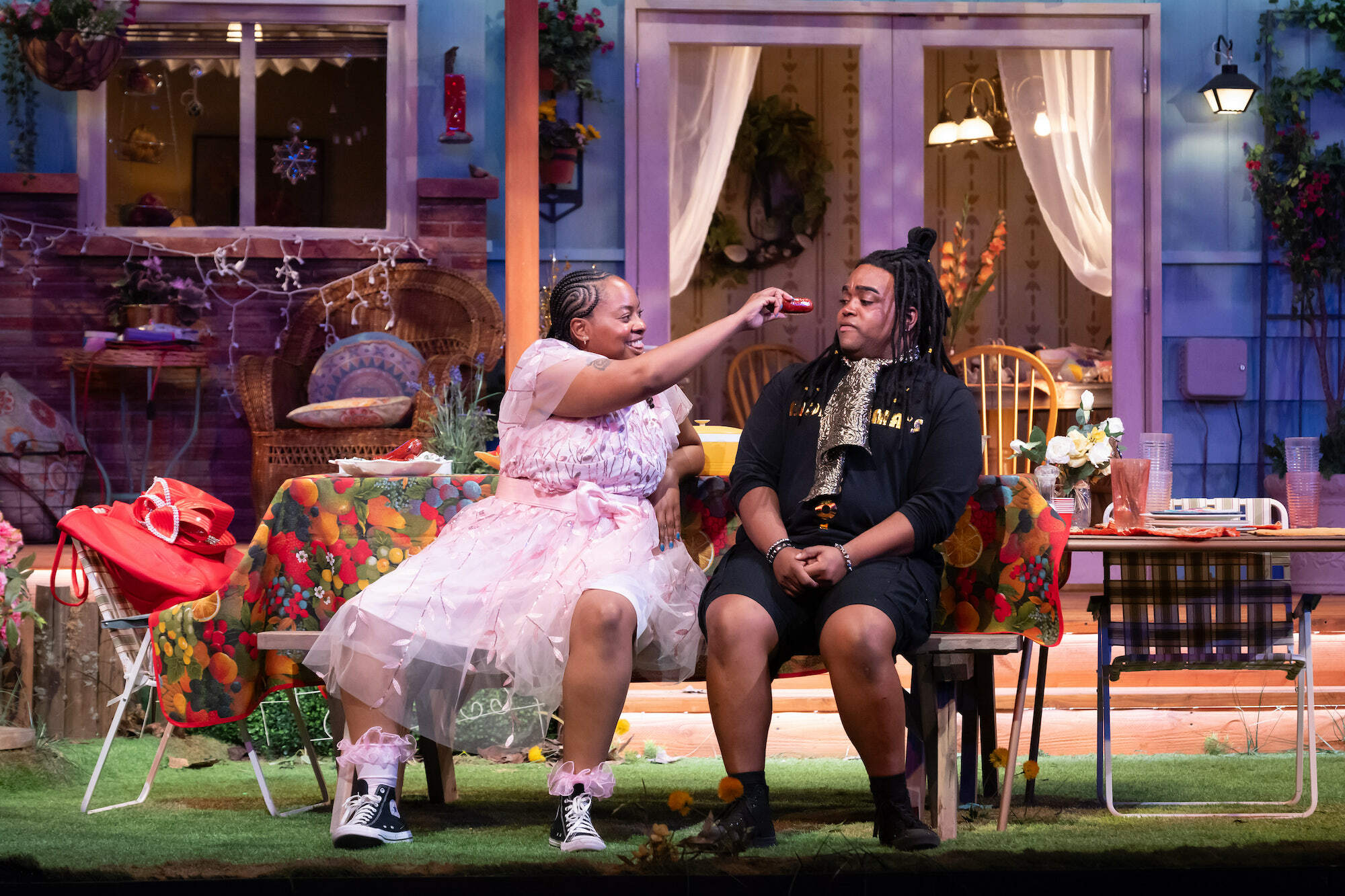
FAT HAM at Portland Center Stage And Portland Playhouse
Broadway World's Krista Garver calls Fat Ham "a show about the active, courageous choice to be vulnerable and find joy."
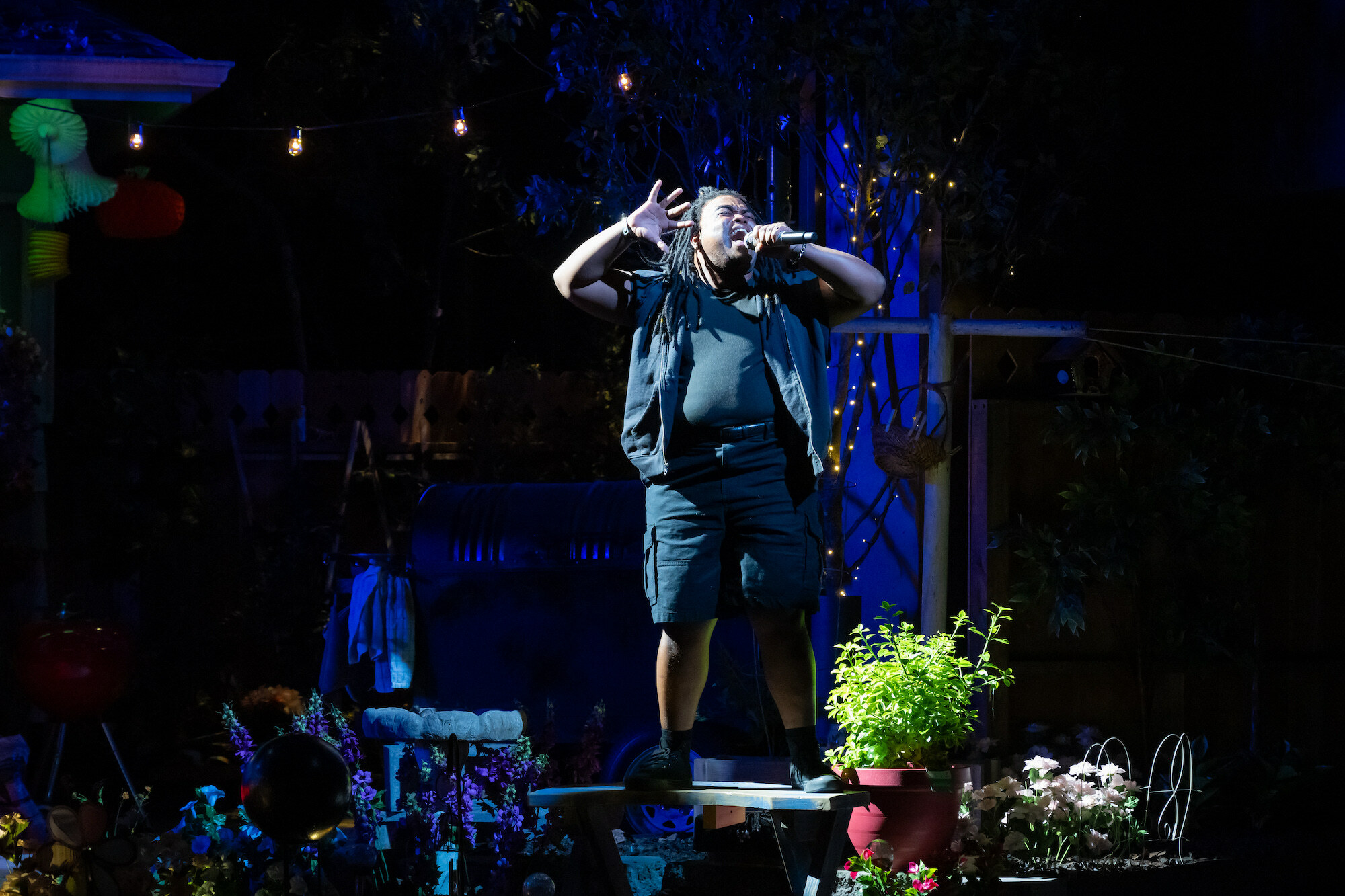
With ‘Fat Ham,’ Portland Center Stage Presents James Ijames’s Pulitzer-Winning Spin on ‘Hamlet’
Willamette Weekly's Eric Ash reviews Fat Ham noting that "though it’s a tragedy that inspired this play, it’s a comedy through and through."

‘Fat Ham’: a little murder, a little comedy, a little wedding, a little backyard barbecue
Portland Playhouse and Portland Center Stage combine on a lively production of Jame Ijames' updated version of "Hamlet," set amid a North Carolina barbecue bash.
Current & Upcoming

Pride & Prejudice
Love, misunderstandings, and plenty of sharp wit take center stage in Kate Hamill’s sparkling adaptation of Pride and Prejudice. Lizzy Bennet prides herself on good judgment—until the enigmatic Mr. Darcy challenges everything she thought she knew about love and first impressions. With playful theatricality, hilarious double casting, and a modern comedic spark, this fresh take on Jane Austen’s beloved romance is as clever as it is swoon-worthy.
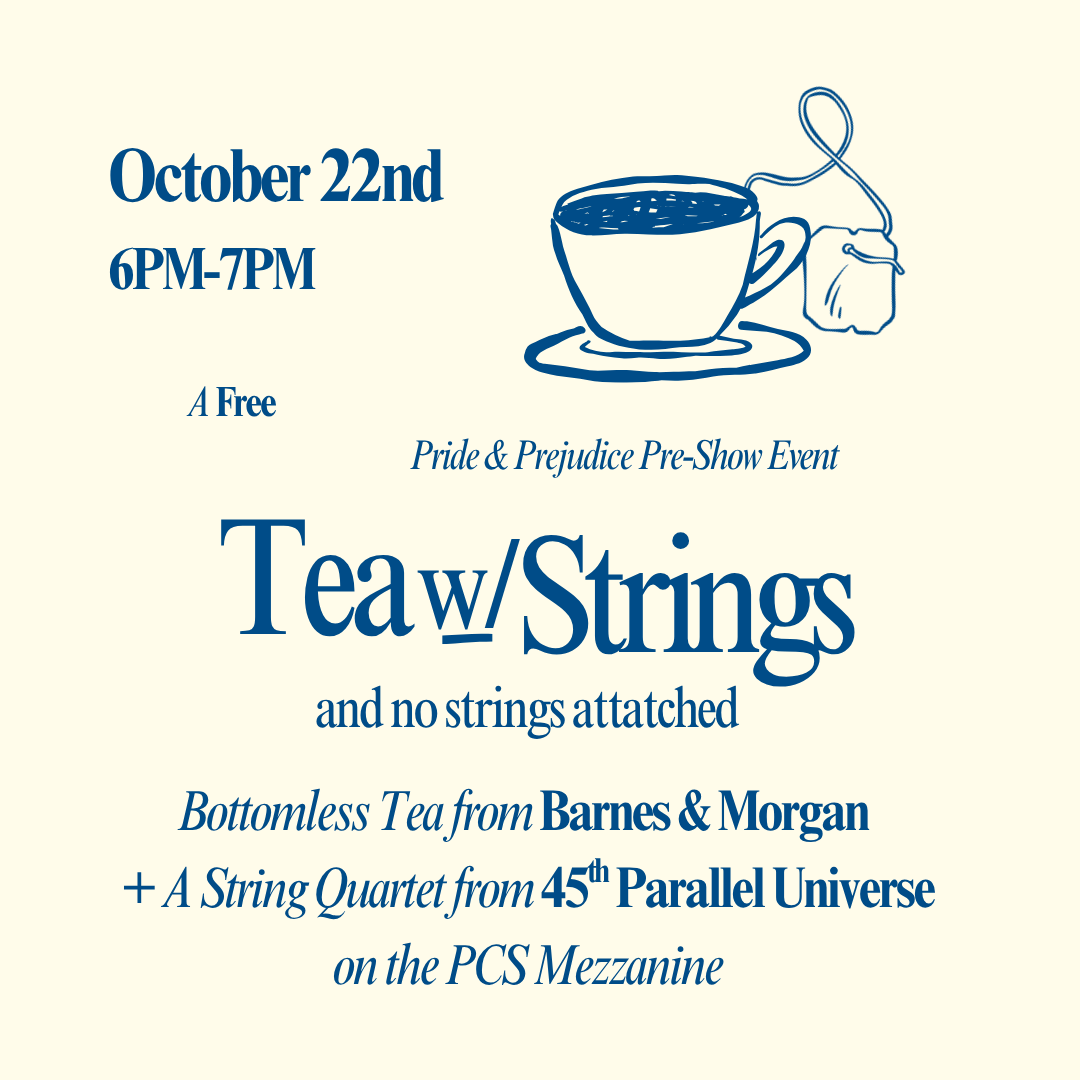
PCS Presents: Tea w/ Strings
Join us for a free pre-show event with bottomless tea from local tea and fashion powerhouse Barnes & Morgan, music from 45th Parallel Universe and of course catch our evening performance of Pride & Prejudice!
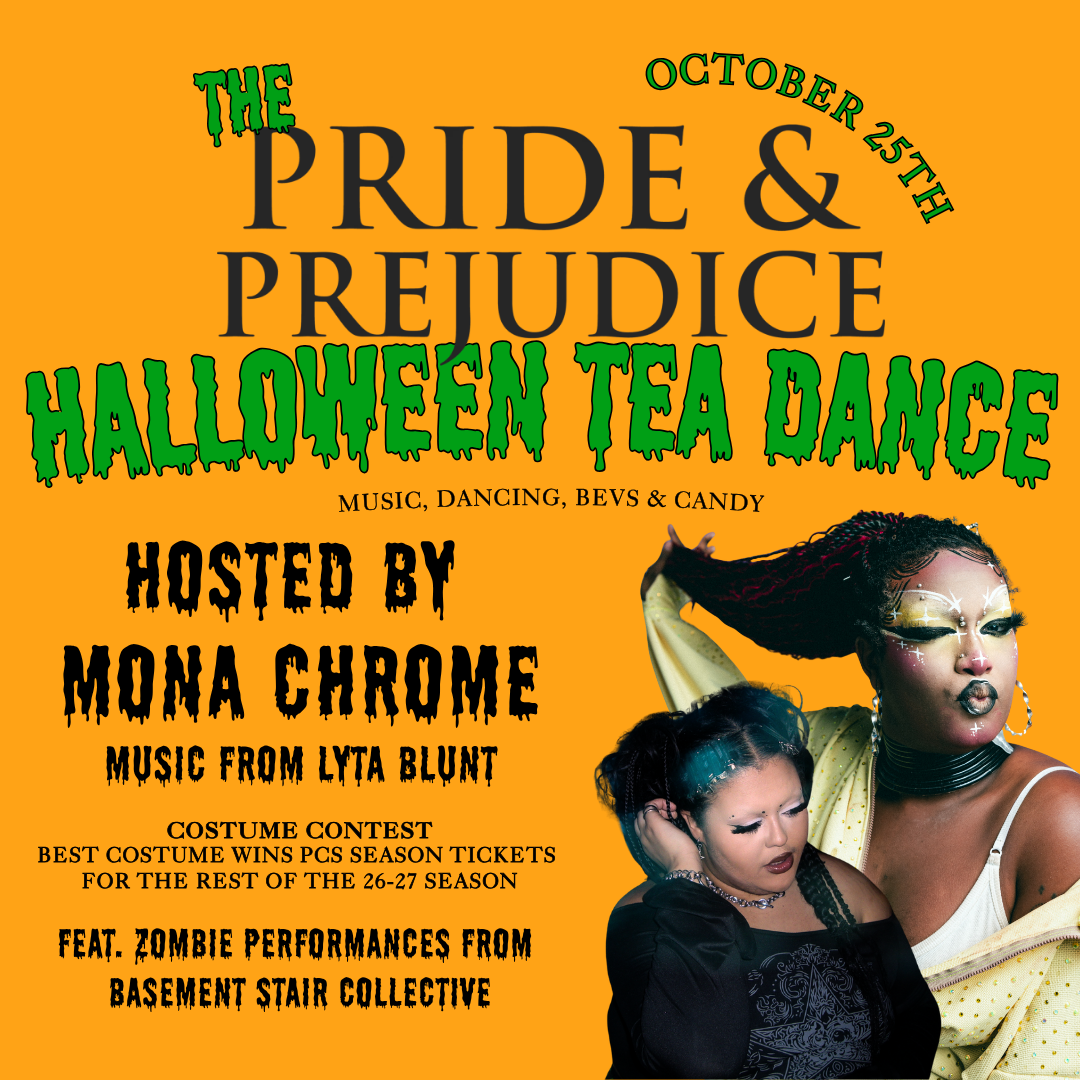
PCS Presents: The Pride & Prejudice Halloween Tea Dance
We are throwing a Halloween themed Tea Dance!
Pride & Prejudice is closing and being taken over by zombies looking to whet their appetite before Halloween. Part costume party - Part Halloween Celebration, Part Regency era courting ritual, All afternoon discotheque tea dance vibes. End your weekend on a spooky note with a somewhat civilized if not undead costume dance party.
Regency era and/or Zombie attire encouraged.
Hosted by the fabulous Mona Chrome, music from the amazing Lyta Blunt. All ages!
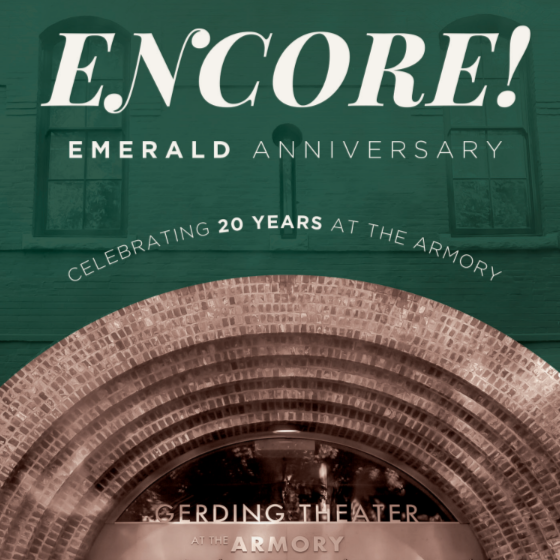
Encore! Emerald Anniversary
Join us for an unforgettable evening celebrating 20 years at The Armory.

November First Thursday with Kiki & The Cuties
Our final First Thursday of the calendar year is going to be a special one! Enjoy live music from local act Kiki & The Cuties, our gallery exhibit Then. Now. Next. 20 Years at The Armory, and of course grab yourself a complimentary beer courtesy of Deschutes Brewery. Doors at 5PM, see ya there!!
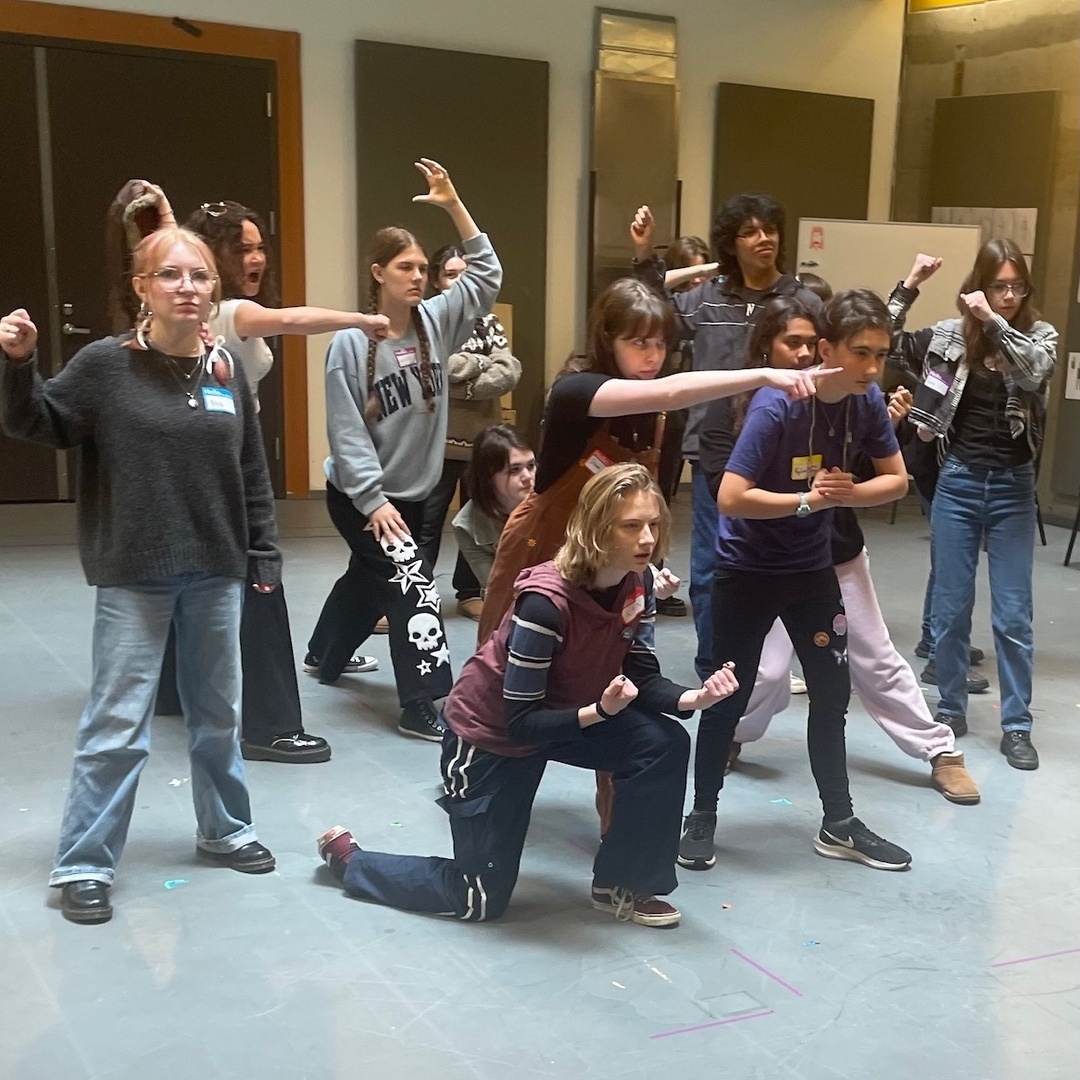
PCS Teens: Fall Improv Classes
Through fun games, acting lessons, and spontaneous character creation these classes will unlock your inner creative genius and give you the chance to get out of your comfort zone in a fun and safe environment.
Portland Center Stage is committed to identifying & interrupting instances of racism & all forms of oppression, through the principles of inclusion, diversity, equity, & accessibility (IDEA).
Season Superstars




Season Supporting Sponsors


Season Producing Sponsors