
Behind the Curtain: An Interview with Costume Designer Dominique Fawn Hill
Dominique Fawn Hill offers insight into her costume design process, philosophy, and ongoing collaborative partnership with PCS Associate Artistic Director Chip Miller.
PCS: Who are you, and what do you do?
DFH: My name is Dominique Fawn Hill and I go by she/her. And the work that I do is create costumes, but I also like to say that I create three-dimensional expressions of art using fabrication of my media.
PCS: Will you share a little bit about your background?
DFH: Born and raised in the Bronx, New York, and then I came from a hodgepodge of different cultures, in terms of the region in which I lived in—the neighborhood. Went to school, undergrad at SUNY Albany. And then after that went to UCSD for Education, which, like, expanded my mind. I think I had this really interesting, fantastical notion of what California was before I arrived. And when I first arrived there, it was a little bit like that. I met a man, he had wavy hair, he had a surfboard. He was cool. And I was like, “I want to live here.” So, over the years, I transitioned back and forth from the East and West Coast. And through that, I learned different forms of storytelling and how to navigate artistry in that way.
PCS: What was your design process like for Lizard Boy?
DFH: So, the process for Lizard Boy has been the accumulation of working with (PCS Associate Artistic Director and Director of Lizard Boy) Chip Miller throughout the years. I think we're going on possibly our eighth year of working together. There's a shorthand there of going through the process and seeing exactly what it means to tell different versions of your story in a fabricated sense. Like something can just be an apple, but you see how you can deconstruct and reconstruct that apple to still have the essence and the root of what it once was—but now it’s in a different, digestible format.
Lizard Boy is no different. Every single part of the costume is in process. Every single costume design element looks like it is unfinished on purpose because it's a continuation, right? Just like it is as we go through life and as we figure out different aspects of ourselves.
A lot of it came from conversations with Chip about each of these singular characters, basing it off of superhero fabrication and color hues, and having color as a sense of currency. Case in point, if you've ever seen They Cloned Tyrone, or The Watchmen, or just basically any type of cartoon Marvel aesthetic, usually you'll see every character has a solid color. That comes with the mania around these characters. A big one that has kind of stood the test of time is the Power Rangers. (The idea that) I want to be the pink one or the yellow one, and Lizard Boy is no different. Each of the very talented actors and musicians that you see in this show have a core color that is displayed through various aspects, not just costume design.
PCS: What are you most excited for about this production?
DFH: I would have to say for people to actually sit still and look closely at how different forms of visual language have a harmonious sense of being on the stage. It's very, very design heavy, very, very storytelling heavy. One thing that's really interesting is how the costumes, the light, the sound, the projections, the musical instruments, the stage management, and of course, the direction, the scene design—every single part of the story comes together in a very, very strong way.
Out of all the shows that Chip and I have worked on together, I would say that this is probably one of the top two of those shows. It’s very evident that this is where we needed to land and where we needed to be. This is one of those shows in which your imagination can go wild, insanely wild. And that's how it is when you're a kid, right? Like you're exploring with your flashlight or, you know, doing shadow puppets or whatever it is, but your imagination doesn't have any bounds. And so, it allows you to actually look at the walls and see the silhouettes on the walls and squint your eyes and be like, “is that what I think it is on the costume?” Or if a projection comes in, you're like, “wait a minute, is that what it is?” All the designers’ work is intermingled. So that's really interesting, and a fairly new sense of design to me as well. That's really, really hard to do without having enough support.
When you come to see Lizard Boy just give yourself grace to examine your own sense of being and realize, “oh, it's okay to be where I'm at, and it's okay to grow, and it's okay to at any second have a chance to rewrite my story.” It's a blessing to realize that for myself as well, as I'm also navigating a journey between life, art, and mind and soul.
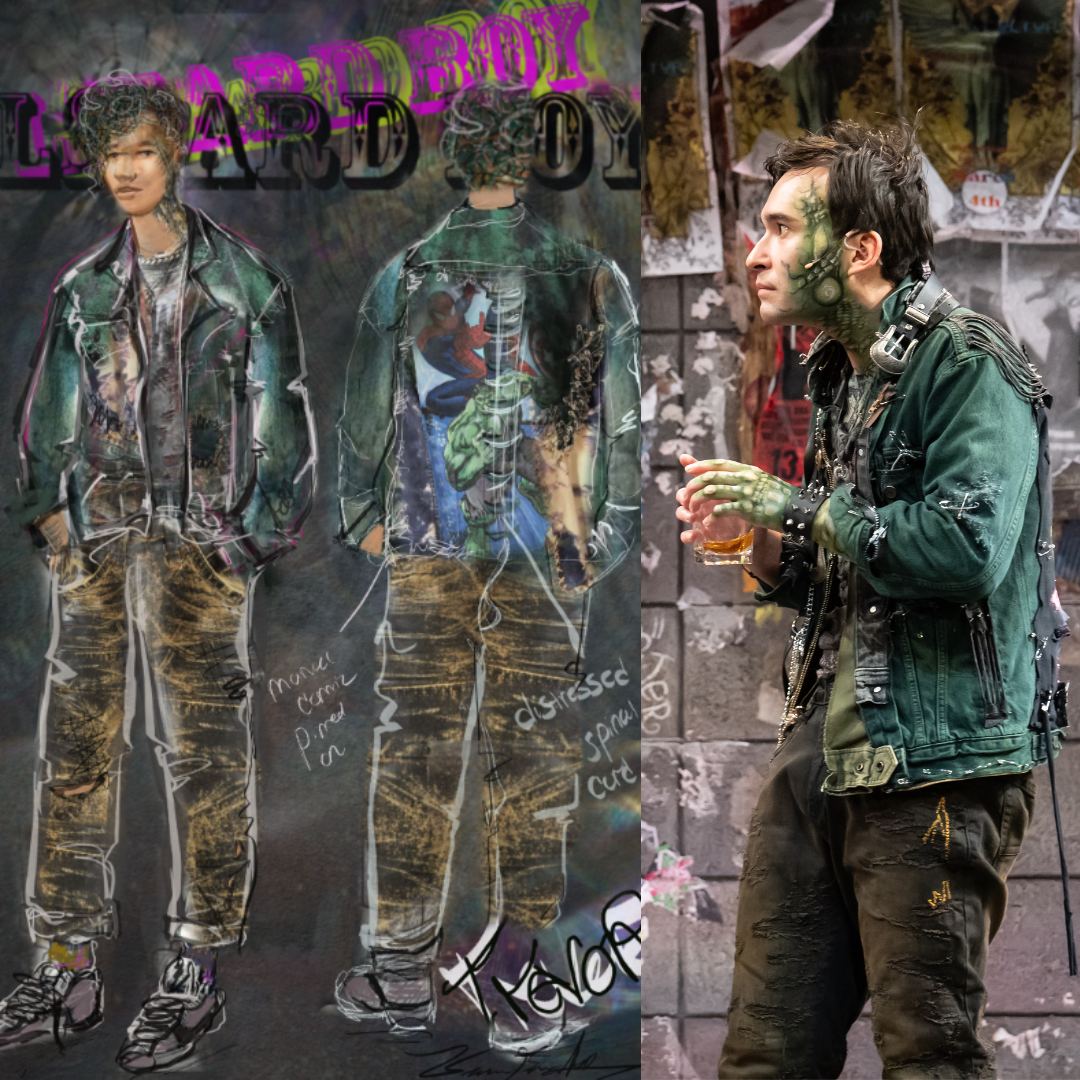
Costume Design rendering by Dominique Fawn Hill and the costume worn by Milo Marami as Trevor in Lizard Boy (production photo by Jingzi Zhao).
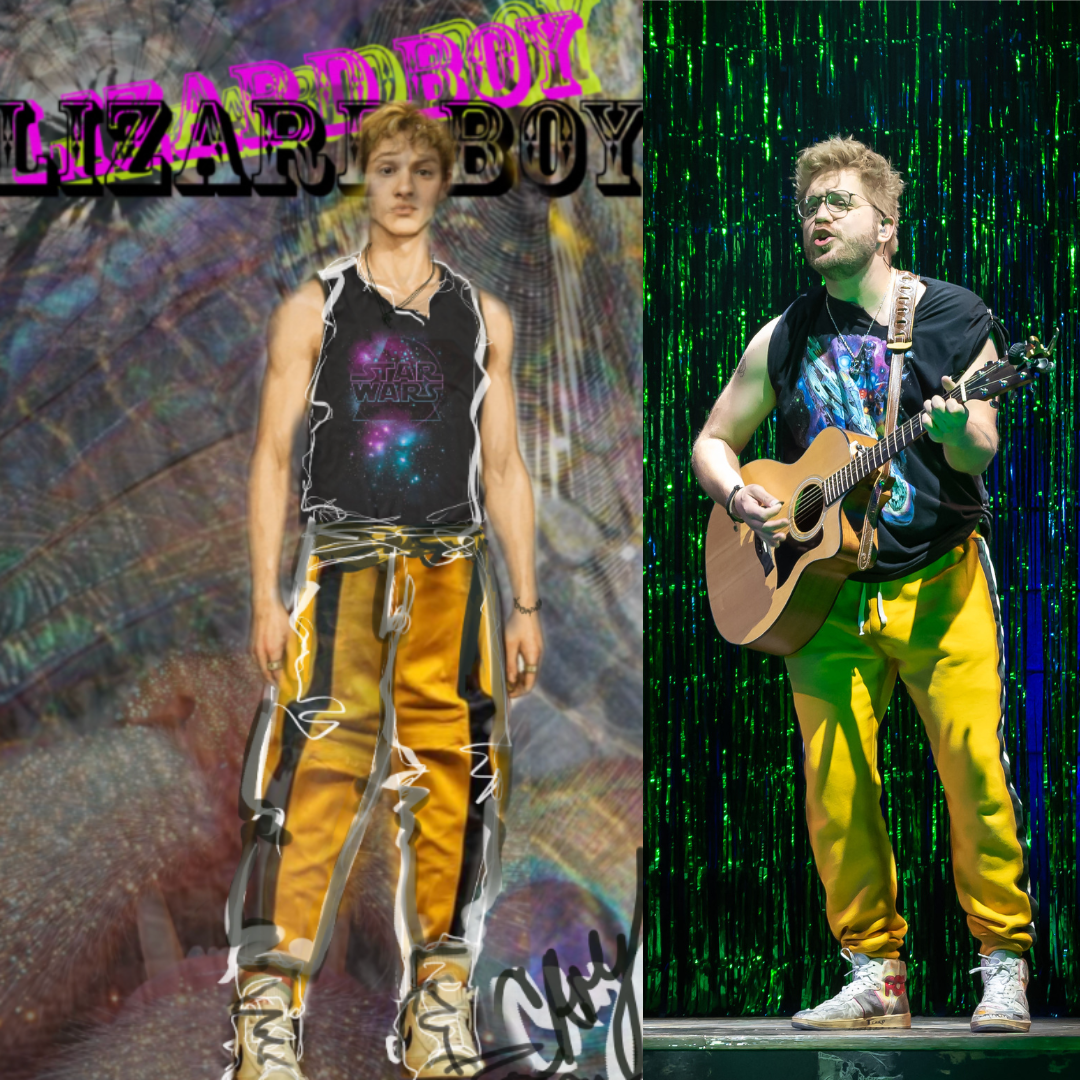
Costume Design rendering by Dominique Fawn Hill and the costume worn by Benjamin Tissell as Cary in Lizard Boy (production photo by Jingzi Zhao).
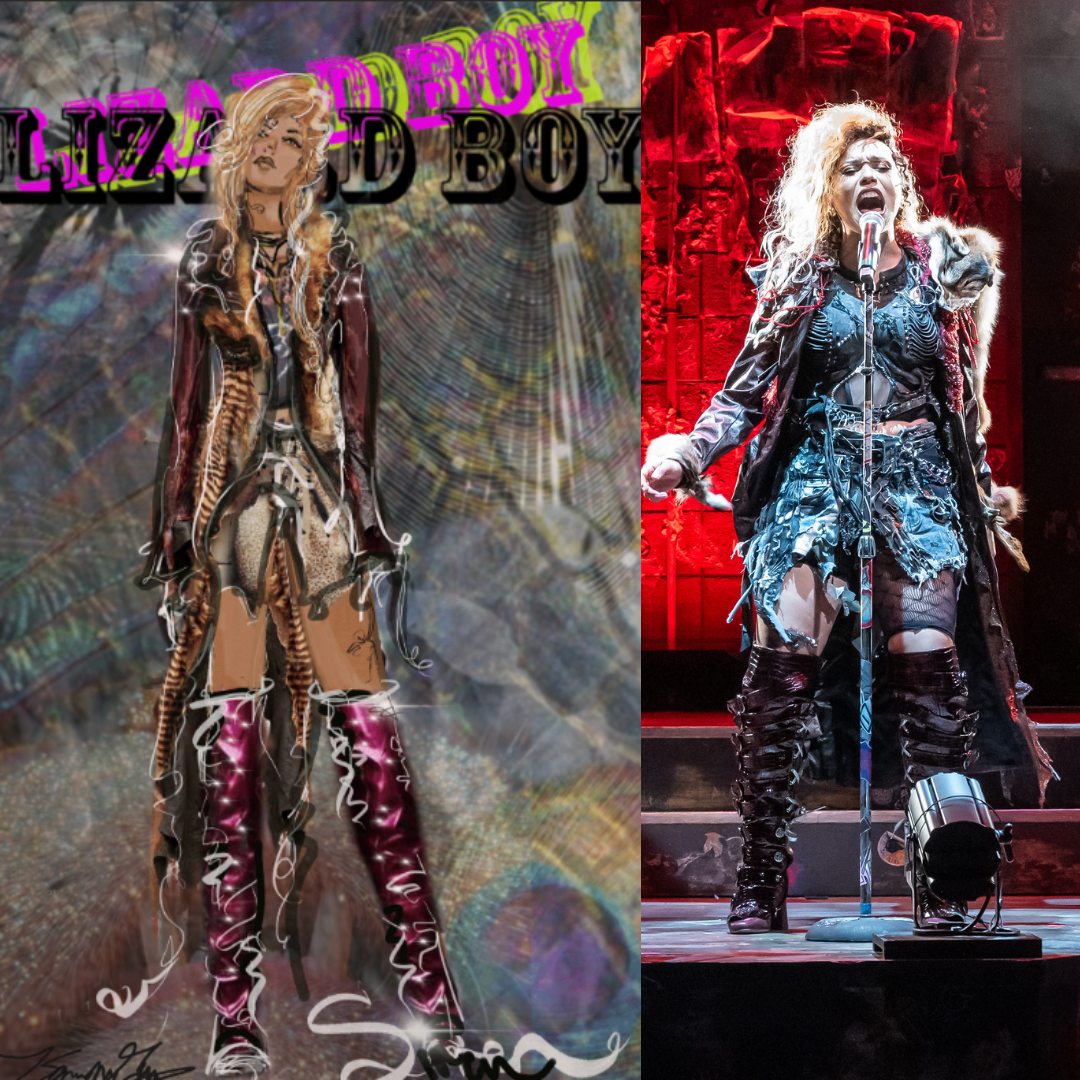
Costume Design rendering by Dominique Fawn Hill and the costume worn by Lo Steele as Siren in Lizard Boy (production photo by Jingzi Zhao).
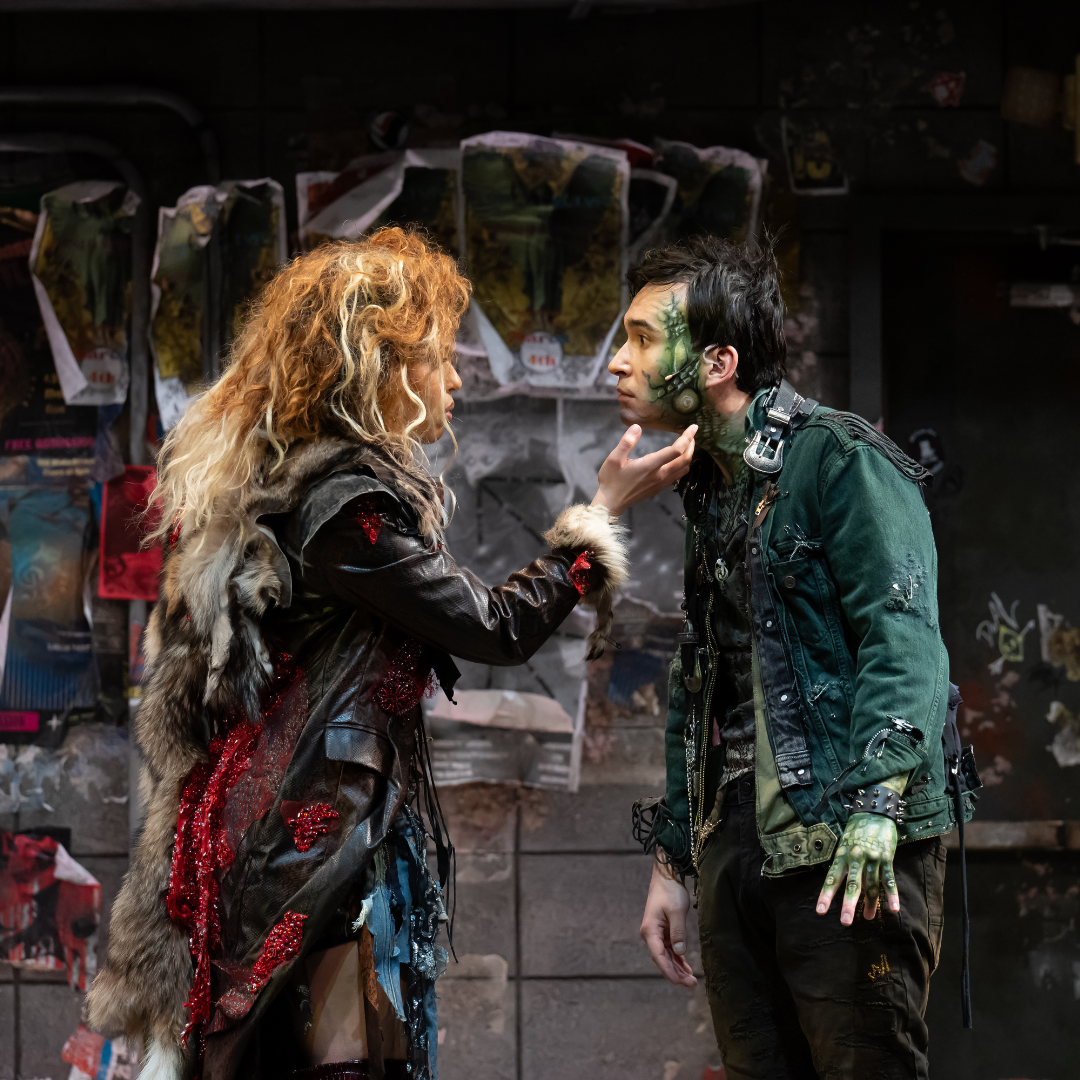
Lo Steele as Siren and Milo Marami as Trevor, wearing costumes designed for Lizard Boy by Dominique Fawn Hill. (Production photo by Jingzi Zhao.
Dominique Fawn Hill (She/Her), Costume Designer
Dominique Fawn Hill is a costume designer/fabric-composer that merges an everlasting dance between Faith, Texture, Image, and Purpose. Her belief in Jesus Christ and her hometown Bronx, NY, have over the years instilled in her glamour, grit, and the willingness to always look at the world through an empathetic lens. Her designs include Broadway: Fat Ham (Tony Award and Lucille Lortel nominations). Off-Broadway: Bust (Alliance Theatre), Primary Trust (Alley Theatre), Tambo & Bones (Lucille Lortel nomination), Where the Mountain Meets the Sea (Manhattan Theatre Club), The Dark Girl Chronicles (The Shed), and 125th & FREEdom (National Black Theatre).
Recent Portland Center Stage collaborations include Lizard Boy (2026), Clyde's (2024), Choir Boy (2023), and Hedwig and the Angry Inch (2020/2022).
Current & Upcoming
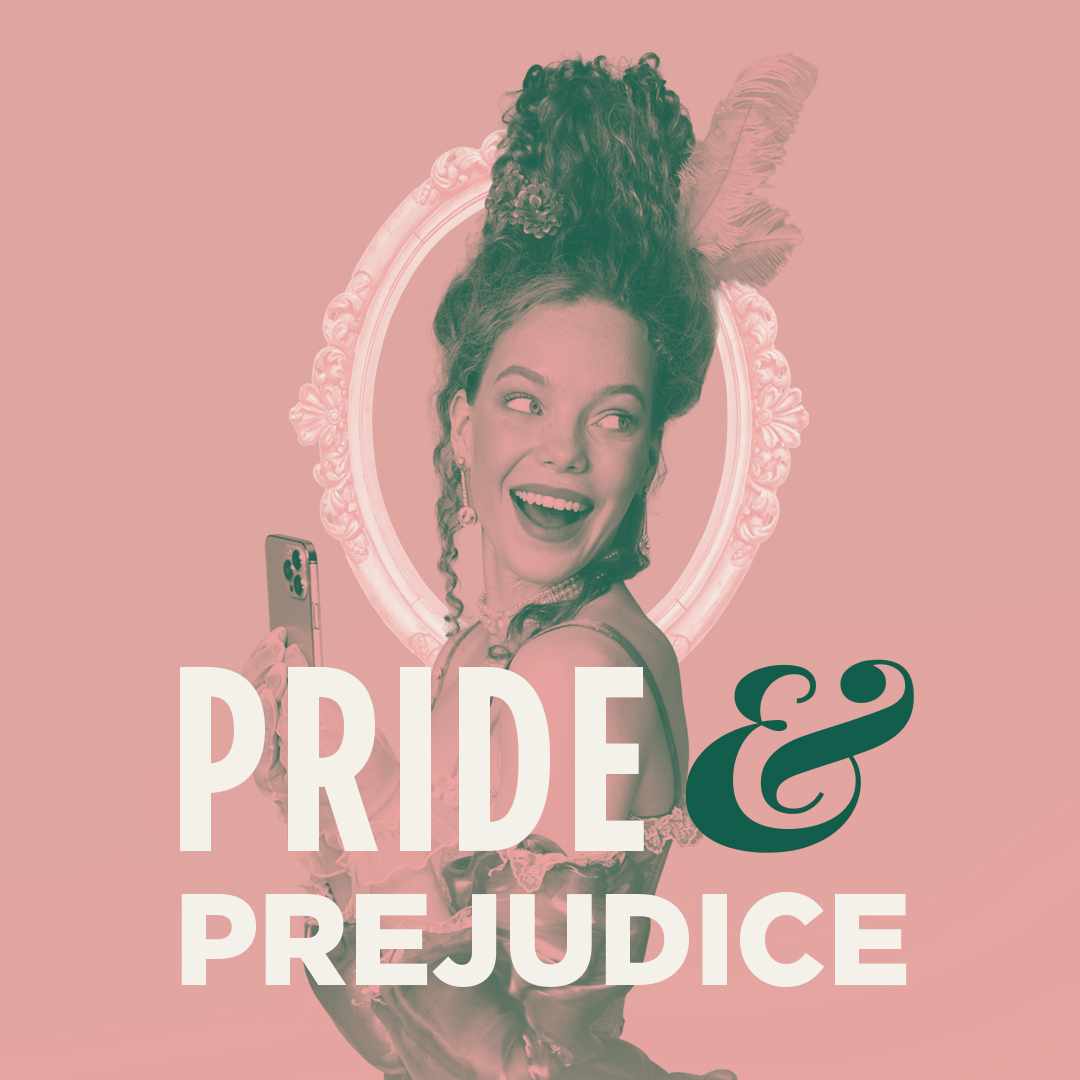
Pride & Prejudice
Love, misunderstandings, and plenty of sharp wit take center stage in Kate Hamill’s sparkling adaptation of Pride and Prejudice. Lizzy Bennet prides herself on good judgment—until the enigmatic Mr. Darcy challenges everything she thought she knew about love and first impressions. With playful theatricality, hilarious double casting, and a modern comedic spark, this fresh take on Jane Austen’s beloved romance is as clever as it is swoon-worthy.
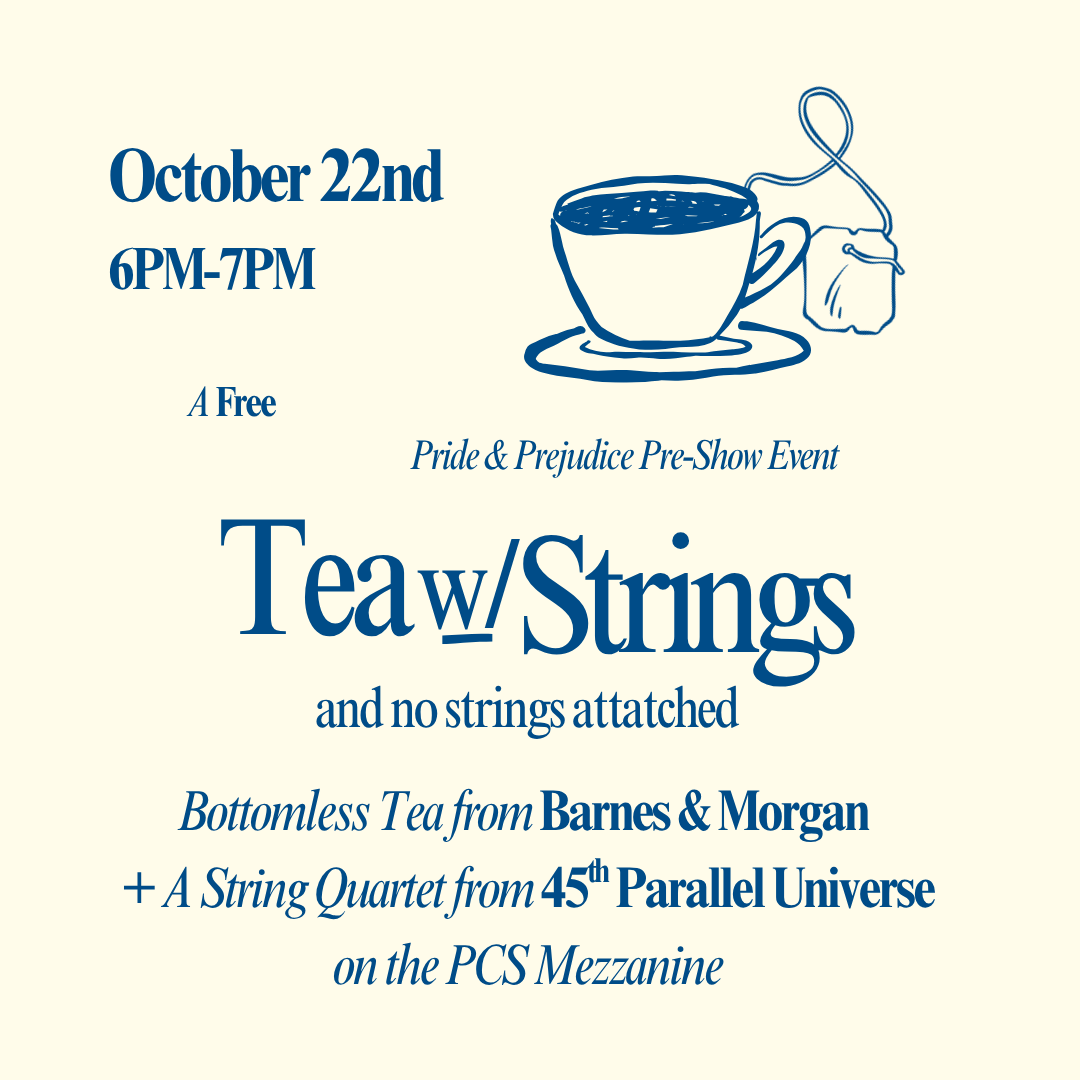
PCS Presents: Tea w/ Strings
Join us for a free pre-show event with bottomless tea from local tea and fashion powerhouse Barnes & Morgan, music from 45th Parallel Universe and of course catch our evening performance of Pride & Prejudice!
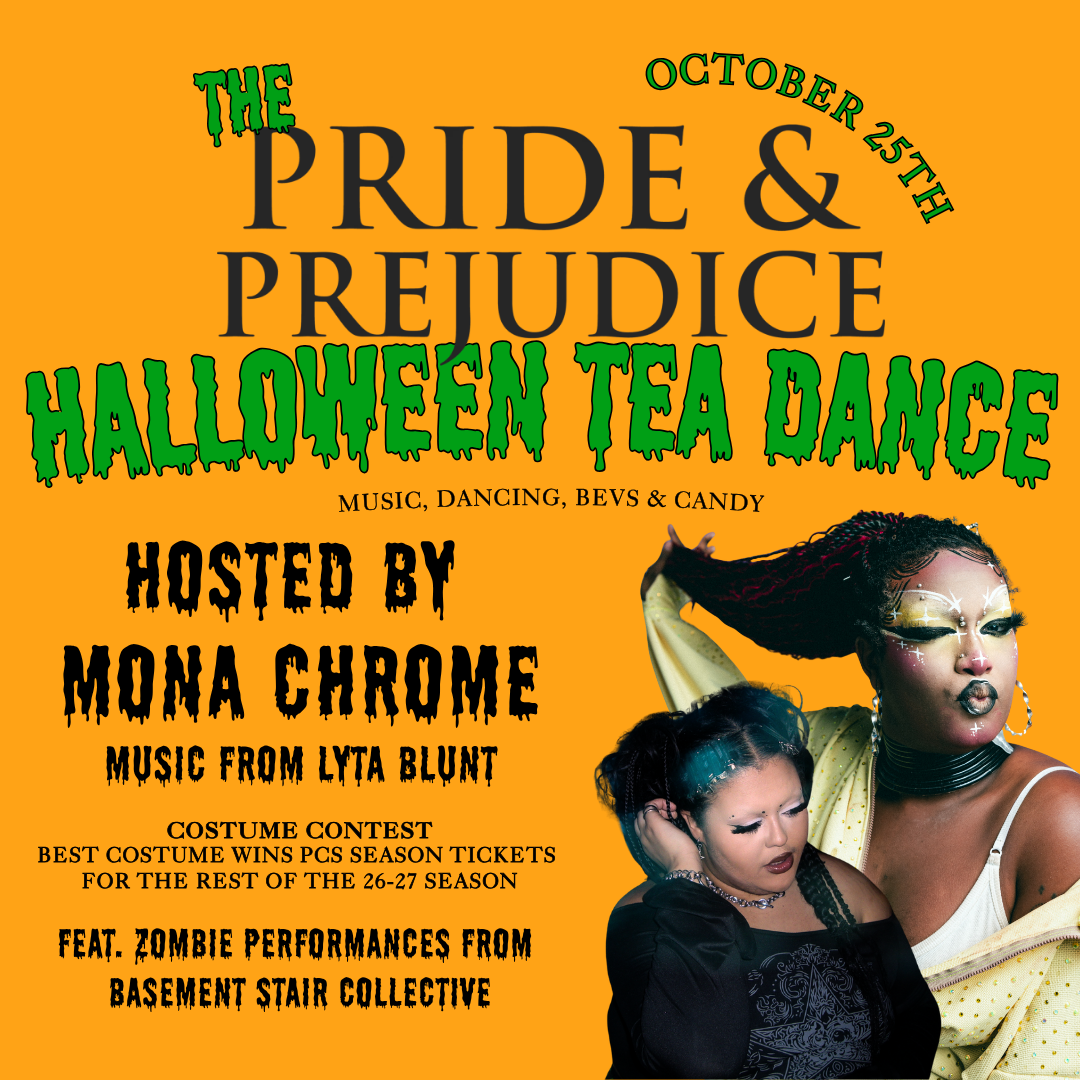
PCS Presents: The Pride & Prejudice Halloween Tea Dance
We are throwing a Halloween themed Tea Dance!
Pride & Prejudice is closing and being taken over by zombies looking to whet their appetite before Halloween. Part costume party - Part Halloween Celebration, Part Regency era courting ritual, All afternoon discotheque tea dance vibes. End your weekend on a spooky note with a somewhat civilized if not undead costume dance party.
Regency era and/or Zombie attire encouraged.
Hosted by the fabulous Mona Chrome, music from the amazing Lyta Blunt. All ages!
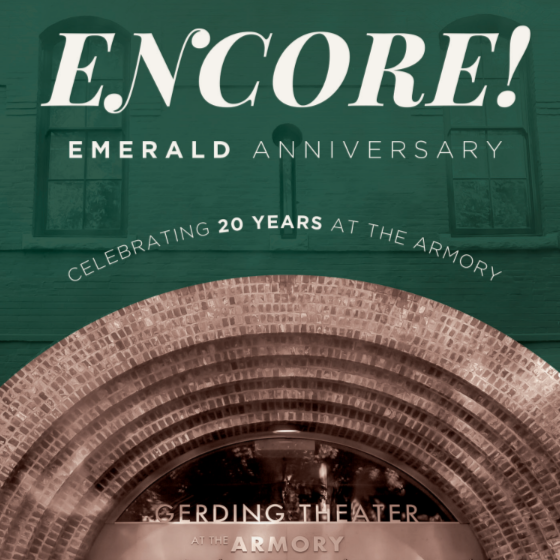
Encore! Emerald Anniversary
Join us for an unforgettable evening celebrating 20 years at The Armory.
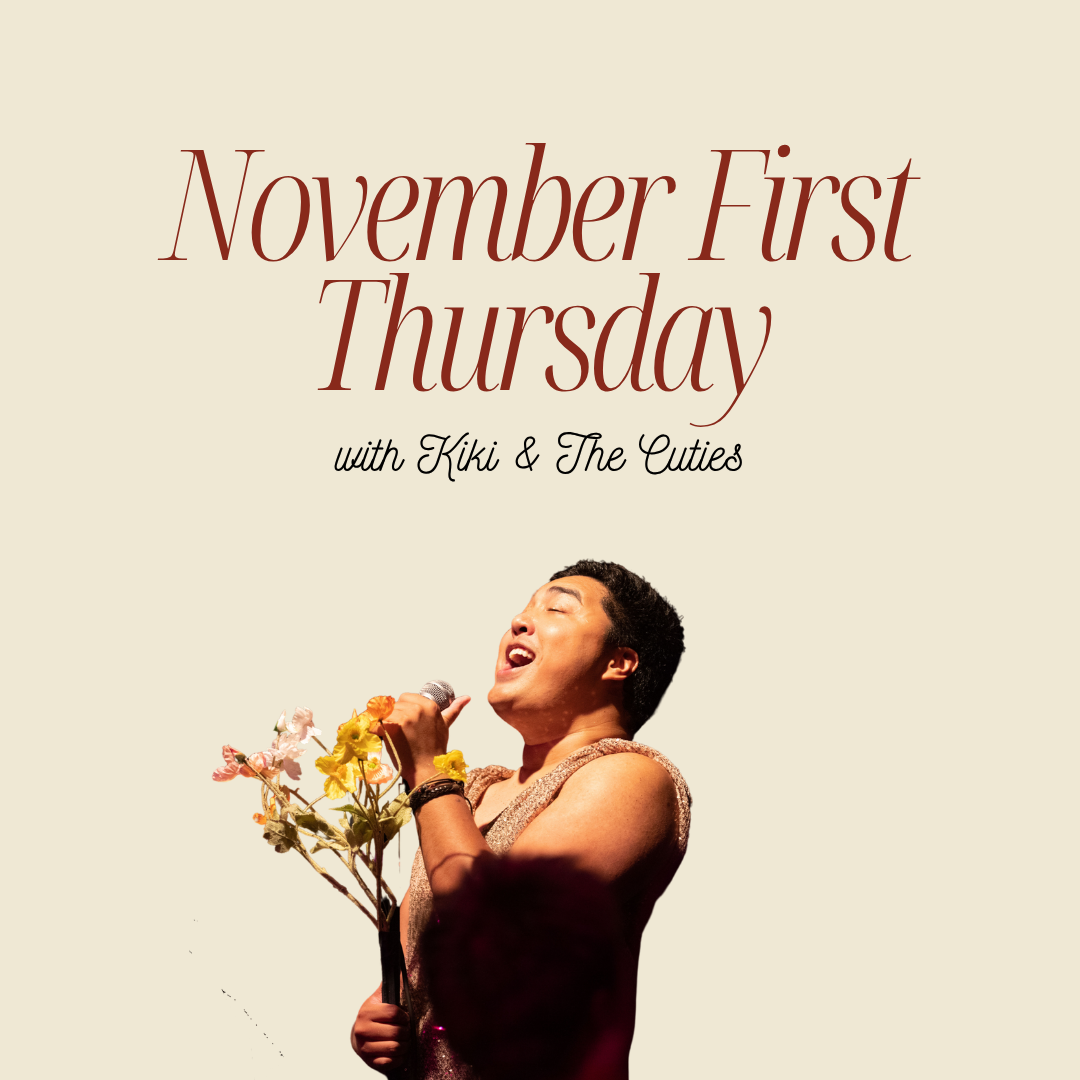
November First Thursday with Kiki & The Cuties
Our final First Thursday of the calendar year is going to be a special one! Enjoy live music from local act Kiki & The Cuties, our gallery exhibit Then. Now. Next. 20 Years at The Armory, and of course grab yourself a complimentary beer courtesy of Deschutes Brewery. Doors at 5PM, see ya there!!
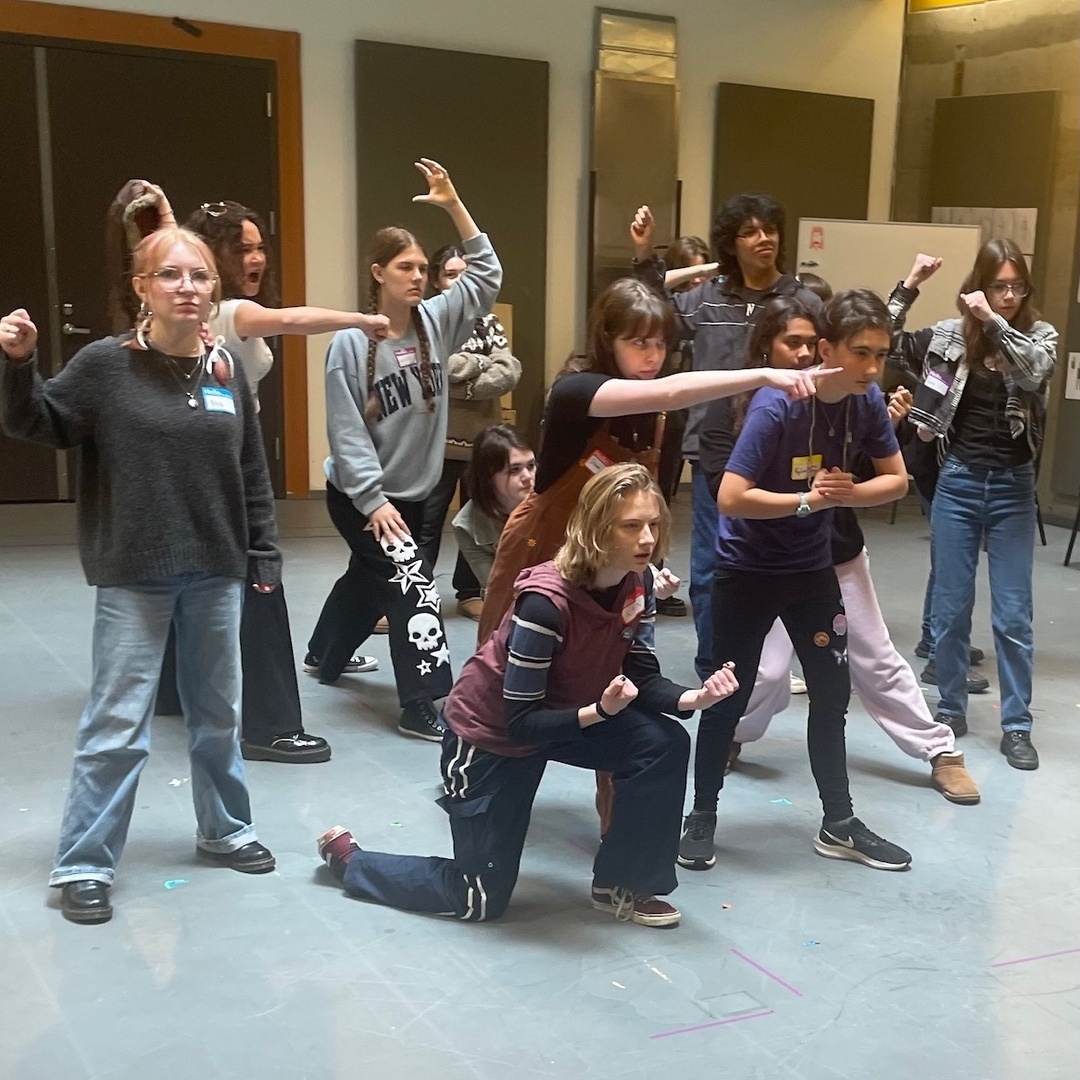
PCS Teens: Fall Improv Classes
Through fun games, acting lessons, and spontaneous character creation these classes will unlock your inner creative genius and give you the chance to get out of your comfort zone in a fun and safe environment.
Portland Center Stage is committed to identifying & interrupting instances of racism & all forms of oppression, through the principles of inclusion, diversity, equity, & accessibility (IDEA).
Season Superstars



Season Supporting Sponsors


Season Producing Sponsors