

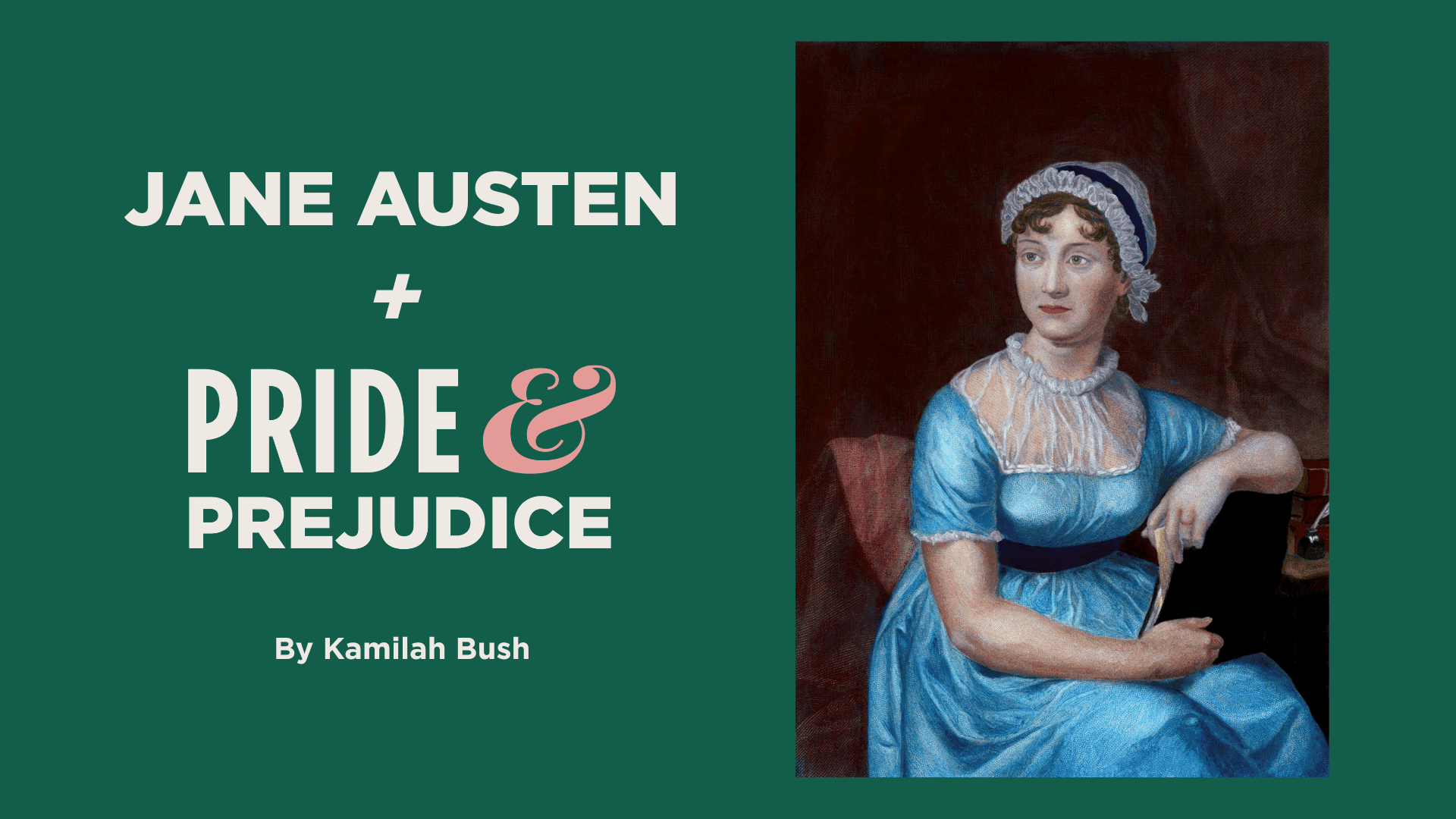
Jane Austen + Pride & Prejudice
Life
Jane Austen was born December 16, 1775 to Cassandra (nee) Leigh and George Austen — the seventh of eight children and only one of two daughters. George, an Anglican rector, did come from a wealthy family of wool merchants, but because he was not from a line of eldest sons, his branch of the family did not have much money. The Leigh family, however, was a prominent one and Cassandra’s inheritance helped fund their lives, along with some help by George’s wealthy uncle Francis. The Austen family was dedicated to reading and education. Jane and her elder sister — Cassandra Elizabeth, who would remain her closest friend throughout her lifetime — were educated at the Reading Abbey Girls’ School, though they eventually returned to home-studies. The Austens were a large family with lots of distant relations and friends whose stories and contributions to George’s extensive library furthered the daughters’ knowledge. Known for putting on plays and conducting agricultural experiments, the Austen daughters were also acknowledged to be beautiful — both Jane and Cassandra Elizabeth were called “the best looking girls in England.”
Despite their heralded beauty, neither Jane nor Cassandra Elizabeth ever married. Cassandra Elizabeth was engaged for a brief period, to a clergyman who died in the West Indies before their wedding and in 1802 Jane accepted a proposal from Harris Bigg-Wither, a friend and heir to the Hampshire family, which she rescinded the very next morning. She also had a short romance during a family holiday that also ended because the man died before they could walk down the aisle. Instead of marrying, Jane devoted herself to her writing, and to her more than 30 nieces and nephews.
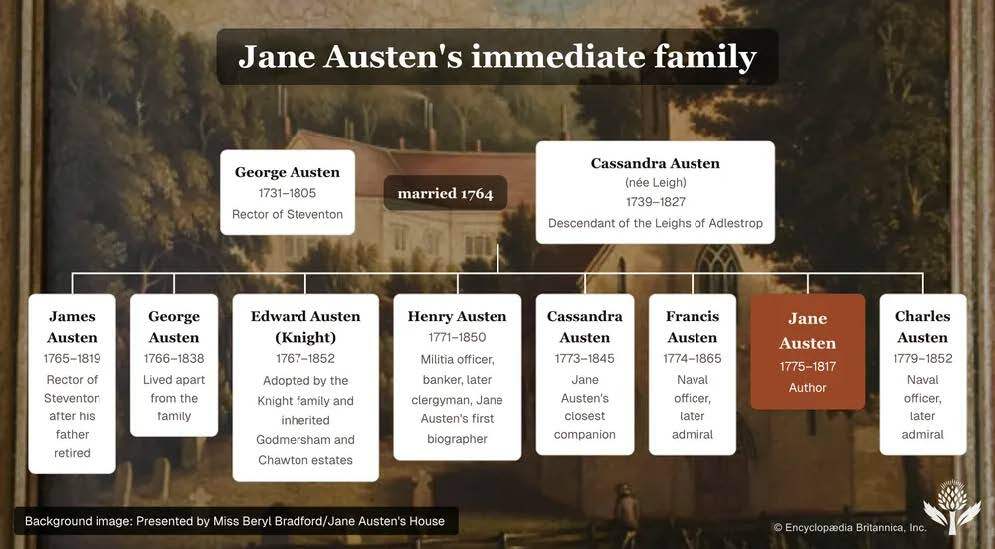
Background image: Presented by Miss Beryl Bradford/Jane Austen's House, courtesy of Encyclopedia Britannica, Inc.
In 1805, George Austen died suddenly, leaving Jane, Cassandra Elizabeth and their mother to depend solely on the five Austen sons.
After a few years of staying with friends, in 1809 the Austen women moved into the home Edward Austen had inherited from the Knight family in Chawton. She wrote of the move:
Our Chawton home — how much we find
Already in it, to our mind,
And how convinced that when complete,
It will all other Houses beat
Because of their meager income, but gleefully in practice, the Austen women handmade most of their belongings — clothing, bedding, wine and beer and some even believe that the ink with which Jane penned her novels was made by them. They continued their practice of reading aloud to each other and performing short plays. When guests arrived, Jane played the piano for them and furniture was pushed to the edges of the rooms to allow for dancing.
In 1817, Jane fell suddenly ill. She’d just begun working on what would later be published as Sandinton at the beginning of the year. By March, she was bedridden. In May the family moved her to Winchester to be closer to her doctor and by July 18, the 41 year old author died. In 1870, her nephew James Edward Austen-Leigh published A Memoir of Jane Austen, her first biography.
The Regency Period
The Regency Period lasted roughly from 1795 to 1837, a span of years expanded to include the last 25 years of King George III’s reign, and so named because it extended to encompass not only the years George IV reigned as king but also the 9 years he reigned as Prince Regent after George III’s mental health faltered. This period has been popularized in current imaginations via shows like Bridgerton and Queen Charlotte. This subsect of time is distinguished into the Regency period, but is part of a larger era of time called The Georgian Period, which encompassed the reigns of George I through George IV, who himself was succeeded by William IV.
King George IV was known for his extravagant tastes, his patronage of the arts, and his influence on fashion. To protest a tax on powder introduced in 1786, he stopped powdering his hair and according to scholar Sophie Beal he “took to wearing darker colours, high necks and pantaloons instead of breeches — and the gentlemen of England followed suit.” Though influential on style, architecture and the arts, George IV was also a known philanderer and drunk whose rule was marked by wantonness and selfishness.
Social Classes
The era in which Jane Austen was writing Pride and Prejudice, and in which the novel is set, was a time of great change both politically and socially. The upper and middle classes were seeing a great period of prosperity due in large part to Parliament’s Inclosure Act of 1773, which reallocated lands that lower class Englishmen used to graze their cattle, into workable farmland for wealthy landowners. With less land available, and cities emerging with factory and domestic work, the lower classes moved into the urban areas and experienced greater rates of poverty, while the middle class emerged as distinct, more wealthy and the upper class thrived. Kajsa Soderstrom writes:
"A number of social, political and economic changes around the turn of the century between 1700s and the 1800s paved the way for a new social class in England. Formerly known as the ‘middling’ groups that did not belong anywhere in particular, the French Revolution, the Napoleonic Wars and especially the Industrial Revolution, brought change that created a larger gap between them and the labouring class and so the need for a more established middle class emerged. This middle class had plenty in common with the upper classes, as their values and ideals had shaped the early middle class people but the “basis of their property and their value system [...] set them apart” (Davidoff and Hall 18)."
In general, society was divided into three major categories, with shades and degrees amongst each rank. Upper classes owned land and were members of the aristocracy, did not work for their money outside of managing their estates. The lower classes worked in people’s homes as domestics, in the growing factories and tended other men’s lands. The middle classes included the landed gentry, some lawyers and doctors, those who owned the factories, clergymen and military officers and the lesser sons of aristocratic families who inherited lands and titles. The bulk of the characters in Pride & Prejudice reside in this middle class. In a letter to her niece, Jane Austen described her work as “two inches of ivory” focusing on “three or four families in a country village”. These families were her peers, and the world she was most closely associated with. Of this class, Daniel Pool in his book What Jane Austen Ate and Charles Dickens Knew has this to offer:
"Land was perhaps more the key than anything else to real social distinction. You certainly needed land to support a peerage with the appropriate style, and at one time it was fashionable to reward poor but impoverished military heroes with great chunks of land along with their titles so they wouldn’t disgrace the peerage…"
This applies to people like Bingley who had inherited enough money through trade, and not by “old family money” to buy an estate, but did not yet own one. Pool writes on:
"Once settled, it was recommended by a contemporary that one try to marry a daughter to one of the county gentry and at the same time try to become a justice of the peace. Above all, people craved a title, the problem being that as you got down among the lower reaches of the gentry there was a danger that anybody could become a baronet or knight — as Jane Austen is quick to point out. That friend of the Bennets, for example, “Sir William Lucas had been formerly in trade in Meryton, where he had made a tolerable fortune and risen to the honour of knighthood by an address to the King, during his mayoralty. The distinction,” Austen adds loftily, “had perhaps been felt too strongly.”
In this society, upward mobility was possible, but not without its considerable difficulty and mainly only achieved by marrying well, inheriting well or proving oneself useful in battle.
Etiquette & Decorum
Published in 1805, Reverend Dr. John Trusler’s guide A System of Etiquette included the following list of “precepts”:
- Shew in everything a Modesty
- Be not always speaking of yourself
- Angle not for praise
- Be easy in carriage
- Listen when spoken to
- Be choice in your compliments
- Flatter delicately
- Command your temper and countenance
- Seem friendly to enemies
- Never see an affront if you can help it
- Avoid wrangling
- Judge not of mankind rashly
- Trust not too implicitly in many
These precepts were the building blocks of much of Regency Era manners — And as the British were known for saying as early as the 14th century “manners maketh the man”. On the whole, the directive was to not be too excitable — men were meant to be slow to anger and not loud or boisterous and women were meant to be demure and not even laugh too freely. Second only to that, gentlemen and women were also meant to be “accomplished”. For women, this meant being well read, singing, playing an instrument — likely the harp or pianoforte, speaking at least 2 or 3 languages — Latin, French and German were popular, and some expertise in an artistic pursuit — drawing, painting, needlepoint or embroidery. For men, this meant attending a “good” school, speaking several languages, playing some sport — cricket, polo, hunting, boxing, horse racing/riding, staying up on geopolitics, patronizing or collecting art, and being a member of a club. It was required to be “genteel” in countenance but that meant very little if there were no accomplishments to carry that gentility and none of that mattered more than status and wealth.
INTRODUCTIONS
Meeting new people in Regency society was a formal experience. One could not just walk up and introduce themselves to someone they did not know — they had to be introduced by a mutual acquaintance. Josephine Ross’ book Jane Austen’s Guide to Good Manners, lists the following requirements for an introduction:
- Do not be presumptuous in offering introductions
- Only a person of higher rank can request an introduction to a lower or equally ranked person, not the other way around
- Respect a lady’s reputation
- While a gentleman may request an introduction to a lady, “it is proper for a gentleman, in public, to wait until he is greeted by the lady before acknowledging their connection
- Do not attempt to bring friends of different ranks together
- Recognize the ‘distinctions of rank’
- While someone may be a “gentleman”, how and when he earned his money is subject to distinction within the same social class (a doctor may earn more respect than a soldier, etc.)
- Become familiar with styles and titles
- Know if someone should be addressed as “Lord” or “Lady”; “Honorable”; etc.
- Always show restraint on meeting and greeting
- “Indeed, it is a point of English decorum…that they should be so: Flamboyances and flourishes, such as kissing hands, etc. are best left to other nationalities”
- “Between sisters or ladies of equal age, or rank, within a family, a kiss on the cheek is acceptable; gentlemen and ladies on affectionate terms may exchange a cordial handshake. In almost every circumstance, a gentleman will make a slight bow, a lady a restrained curtsey on meeting. The depth and duration of these gestures should be in proportion to the honor they are intended to confer — a slight inclination of the head, a swift bob of the knees will suffice between — say the Miss Bingleys and the Miss Bennets….A more exaggerated gesture…is a sign of foppery rather than good manners; and the constant ‘low bows’ bestowed by Mr. Collins are…ill judged, and obsequious…”
- Take care in the correct use of names
- “The eldest daughter in a family is simply ‘Miss X’ using her surname only. Any sisters are Miss (Christian Name) X. Thus in Pride and Prejudice, the heroine’s elder sister is Miss Bennet, while she is Miss Elizabeth Bennet.”
- “Men of equal rank…may refer to one another by surnames alone”
- Husbands and wives of Mr. & Mrs. Bennet’s age often refer to each other as such, while younger married couples are beginning to use each other’s christian names — which is “wholly improper” in any other setting.
- “Even young ladies should not be too prompt to call one another by their first names…”
CALLING & COMING OVER
“Calling on” someone simply meant going over to their home for a visit and was an expected part of most people’s days. Calling could begin in the “morning”, which includes any time between breakfast and dinner — typically between 10 AM and 3:30-4:00 PM. Josephine Ross’ rules are:
- A lady may not call upon any gentleman
- Be sure to leave cards
- “All ladies and gentlemen should carry “Calling Cards” printed with their name and title, to which may be added, by hand, their current address.” These cards are presented to the servant upon arrival and given to the party on whom the call is being made. One might also write when they’d next be home so their call could be returned.
- Pay, and return, calls promptly
- A call, gone unanswered, for a number of weeks without explanation is essentially the end of a friendship
- Do not call too briefly
- “Any visit should last for at least fifteen minutes”
- Visits of ‘duty’ must never be neglected
- “Calls which may be considered a duty rather than a pleasure are those ‘visits in form’ which must be paid to the newly-married; the bereaved; and those in straitened circumstances”
- Visits of ‘pleasure’ should be carefully judged
- “It is good manners for an unattached gentleman to call on his principal partner of the night before [at a ball]...however ...such visits should be undertaken with care: an overly eager call by any gentleman upon a lady may lead to unwarranted speculation.”
- Make polite conversation
- Conversations should always begin with an inquiry about one’s family and health and only veer into subject of mutual interest and/or small talk about one’s “accomplishments”
- Occupy yourself and your guests
- Where conversation fails, one may serve refreshments and “a gentleman is at liberty to pick up a newspaper during and call…for ladies, there is always the option of ‘working’ — meaning, of course, needlework.” — women could offer to help mend the man of the house’s garments like collars and shirts, but never underwear.
- When in doubt, talk of the weather
DANCING
All gentlemen and ladies were expected to know how to dance — an education that began in one’s youth. The instructor could be an elder family member, but families also employed professional dance instructors. Dancing was a mandatory part of Regency society, so much so that Ross’ first rule is:
- Learn to dance – and to dance well
- A gentleman may not as a lady to dance with him without a formal introduction
- Having refused one gentleman, a lady may not accept another’s invitation
- “…a lady may only decline a gentleman’s polite invitation to dance on the grounds of fatigue or some other reasonable excuse. It would be hurtful to his dignity, should she then ‘stand up’ with another partner — however preferable! As a result, many a lady will find herself either obliged to dance with an unappealing partner, or, unless she finds another partner, sitting down for the next two.”
- A lady may not invite a gentleman to dance
- Observe the rules of precedence, with tact
- “The highest-ranking lady present will stand at the head of the first set, and lead off the dancing, unless a ball is given in honor of another person”
- Make amusing conversation while dancing
- Observe the rules of sitting down
- “When the required two dances — or ‘two next’ — end, the gentleman should escort his partner back to her chaperones. It is for him to join her party and be introduced, not vice versa.”
- “If supper is about to be served when a dance ends, the gentleman must remain with his current partner and escort her into the supper room.”
- “At no point (contrary to some ill-informed, modern dramatists’ notions!) will any lady be left to wander a ballroom alone, or mingle freely in a crowd: she will at all times be under the care of either her partner or her chaperone.”
- Do not intrude upon the dancers in the ballroom
- Pay attention only to the person your dancing with; do not interrupt someone who is dancing with someone else.
Preview Image Details
(information about the image that accompanies links to this page)
Engraving of Jane Austen, derived from a portrait by her sister, Cassandra Austen, c. 1810. 7 Continents History/ Everett Collection
More about Pride & Prejudice:

Behind the Curtain: Kate Hamill on Pride & Prejudice
Kate Hamill chats with PCS Literary Manager & Dramaturg Kamilah Bush about adapting Jane Austen, artistic inspiration, the slippery slope of AI, and the strangely complex joy of reality television.
Pride & Prejudice Discussion Questions
See it! Talk about it! Discussion questions for Kate Hamill's Pride and Prejudice provided by Trinity Repertory Theater.
Kate Hamill's Pride & Prejudice: A Synopsis
A brief synopsis of Kate Hamill's theatrical adaption of Jane Austen's Pride and Prejudice by Jessica Hatem Lanman with the permission of Trinity Repertory Theater.
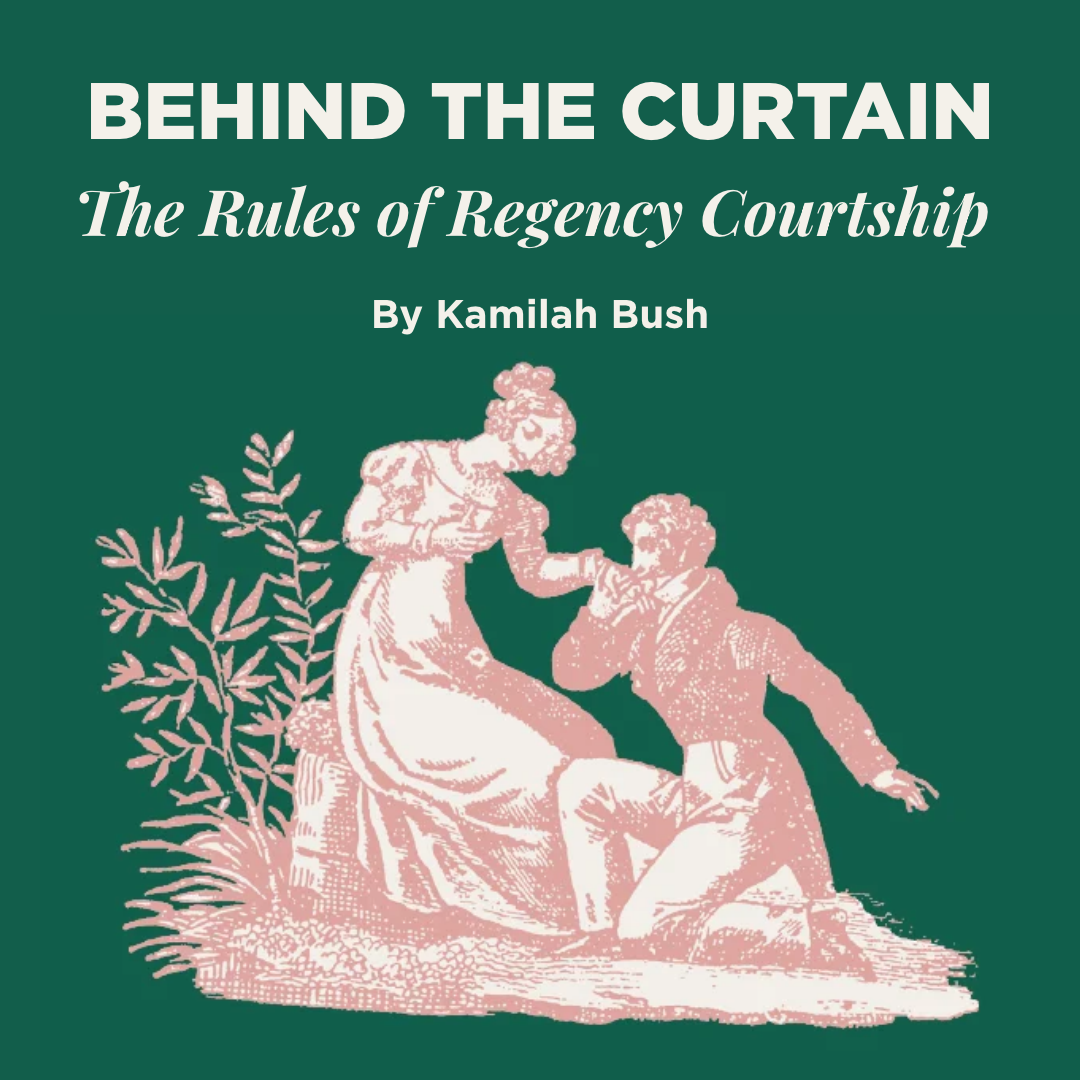
Behind the Curtain: The Rules of Regency Courtship
PCS Literary Manager & Dramaturg Kamilah Bush on the rules of marriage and romance during the Regency era.
Behind the Curtain: The Rules of Regency Courtship
PCS Literary Manager & Dramaturg Kamilah Bush on the rules of marriage and romance during the Regency era.
Kate Hamill's Pride & Prejudice: A Synopsis
A brief synopsis of Kate Hamill's theatrical adaption of Jane Austen's Pride and Prejudice by Jessica Hatem Lanman with the permission of Trinity Repertory Theater.
Pride & Prejudice Discussion Questions
See it! Talk about it! Discussion questions for Kate Hamill's Pride and Prejudice provided by Trinity Repertory Theater.
Current & Upcoming

BIPOC Affinity Night: Pride & Prejudice
Join us for our BIPOC Affinity Night for Pride & Prejudice! Enjoy complimentary beverages from Deschutes Brewery, local vendors on our mezzanine, and live music from local R&B act West Note. A free pre-show event :)

COMMUNION by Matthew LaBanca
Fired by the Catholic Church for marrying his husband, Matthew LaBanca transforms his true story into a powerful evening of music, humor, and hope.
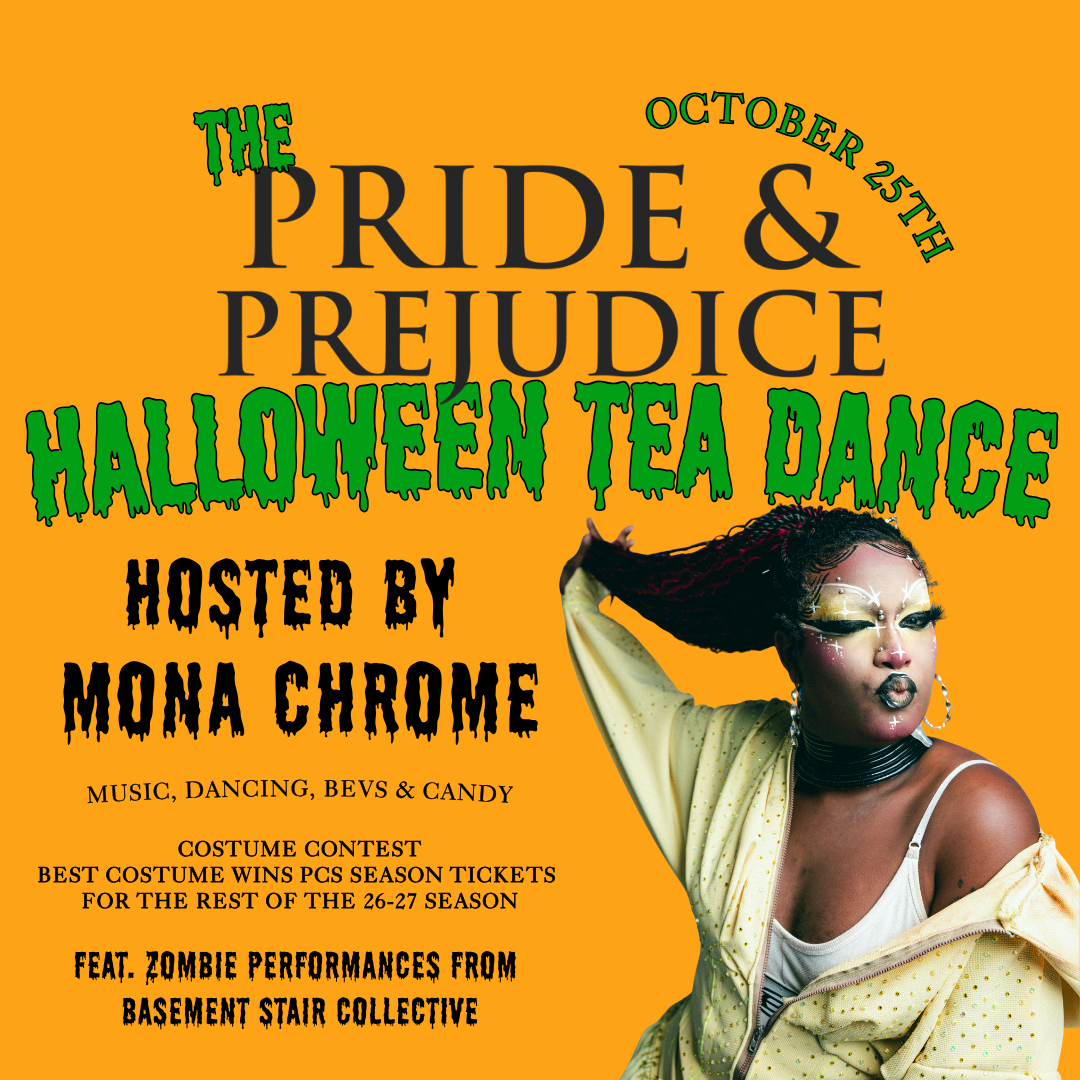
PCS Presents: The Pride & Prejudice Halloween Tea Dance
We are throwing a Halloween themed Tea Dance!
Pride & Prejudice is closing and being taken over by zombies looking to whet their appetite before Halloween. Part costume party - Part Halloween Celebration, Part Regency era courting ritual, All afternoon discotheque tea dance vibes. End your weekend on a spooky note with a somewhat civilized if not undead costume dance party.
Regency era and/or Zombie attire encouraged.
Hosted by the fabulous Mona Chrome.
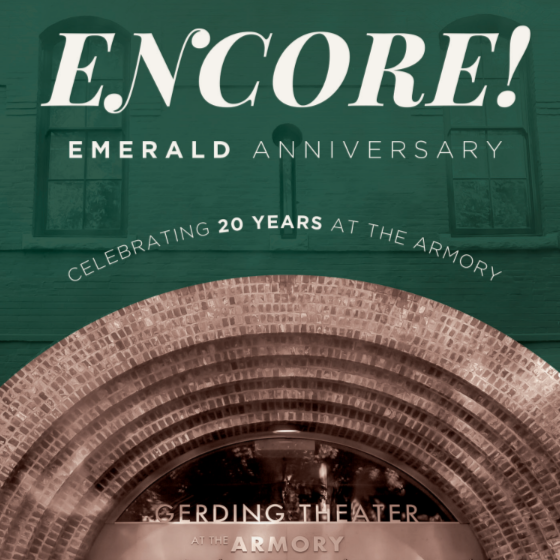
Encore! Emerald Anniversary
Join us for an unforgettable evening celebrating 20 years at The Armory.

November First Thursday with Kiki & The Cuties
Our final First Thursday of the calendar year is going to be a special one! Enjoy live music from local act Kiki & The Cuties, our gallery exhibit Then. Now. Next. 20 Years at The Armory, and of course grab yourself a complimentary beer courtesy of Deschutes Brewery. Doors at 5PM, see ya there!!
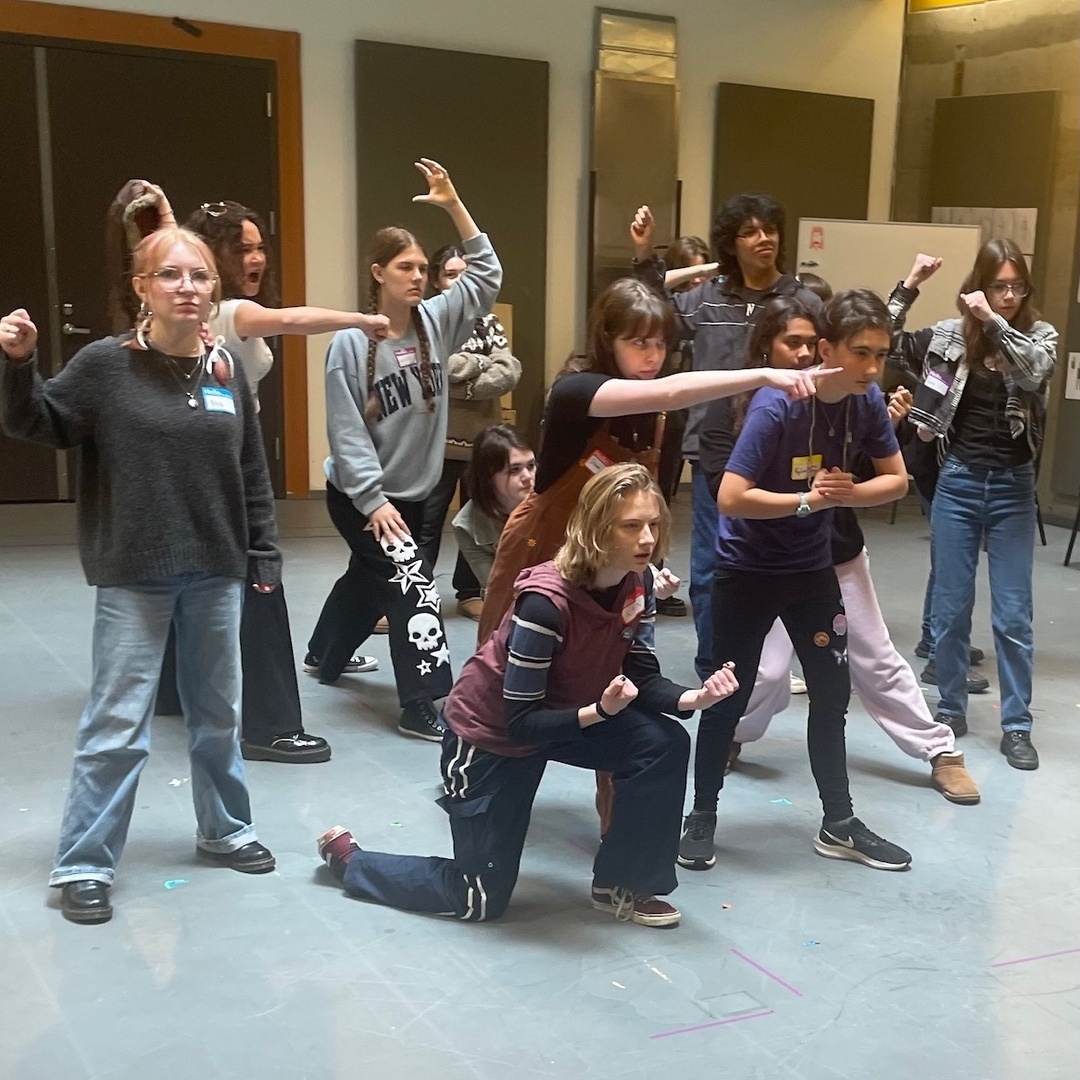
PCS Teens: Fall Improv Classes
Through fun games, acting lessons, and spontaneous character creation these classes will unlock your inner creative genius and give you the chance to get out of your comfort zone in a fun and safe environment.
Portland Center Stage is committed to identifying & interrupting instances of racism & all forms of oppression, through the principles of inclusion, diversity, equity, & accessibility (IDEA).
Season Superstars




Season Supporting Sponsors


Season Producing Sponsors