

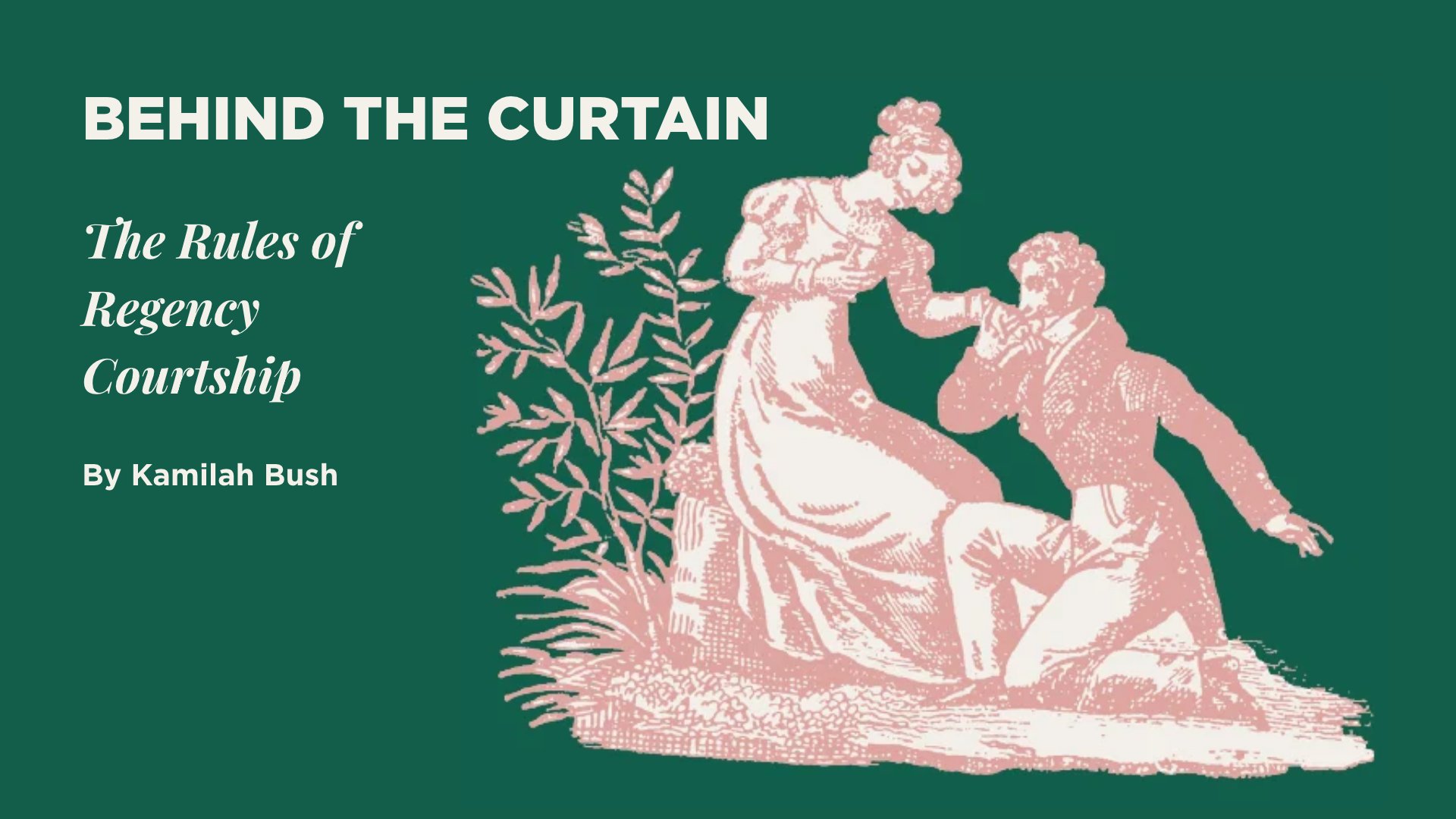
Behind the Curtain: The Rules of Regency Courtship
It is a truth universally acknowledged that a single man in possession of a good fortune must be in want of a wife…When Jane Austen wrote those words, first published in 1813, she was writing into a changing society with a wink and a nod to both the truth and its absurdity. The Regency Era was marked by industrialization, war, and growing middle classes. The bulk of the characters in Pride & Prejudice reside in this emerging middle class. In a letter to her niece, Jane Austen described her work as “two inches of ivory” focusing on “three or four families in a country village.”
Marriage in these two inches of ivory was still mostly a business deal, as marriages could bring greater wealth, status and power to joining families. In the political sphere, smart matches between savvy women and members of Parliament allowed for deals to get done—in the late 1700s, a Lady Rockingham was able to use the purchase of some horses from William Pitt as cover to assess his political leanings and shore up support for cabinet positions. Still, for high society, this era introduced a great change to the marriage market: the concept of a “love match.” Where parents often negotiated marriage matches before, and most couples were arranged, this era began to focus on compatibility and friendship between matches and increasingly, love.
No matter if one married for love or for increase, the road to marriage was serious business with strict and heavily policed rules; rules that were published in countless etiquette and courtship guides. While these rules were meant to protect propriety and allow people to at least appear upstanding, the more important reality was that one need only attempt them well enough to make it down the aisle. Unmarried adults were seen as “not fully participating in society,” divorces were nearly impossible to obtain and for many women, the only path to financial security was marriage. For this reason, it was in everyone’s best interest to marry—and to get it “right” the first time. Below are some of these rules:
1. Men could initiate courtship while women could not
- A woman could discreetly ask for an introduction to a gentleman in whom she was interested, anything more than that could be seen as improper.
2. Courting couples could rarely be alone
- A chaperone was always present when an unmarried lady was in the presence of an unmarried man — this companion, usually female, could be a friend, relation, parent or hired maid but even in public outings such as balls, operas, walks, etc. an unmarried woman was rarely unaccompanied. All of this public dating made courting a spectator sport, subject to much gossip in society. The rare exception could occur when a man dined with the family of the woman he was courting. A few hours after dinner could be spent alone in sitting rooms or on walks about the estate.
3. A man could not reveal his real feelings for a woman until he intended to propose
- Love declarations and proposals were often the same event. A courtship could last months or years before a suitor would declare his love. The hints, like calling and dancing, were meant to stand in for his words.
4. Dancing and parlor games were a way to flirt with impunity
- Because dancing always and game sometimes allowed couples to touch without seeming improper, and because dancing allowed for semi-private conversations, much was made of playing games and attending dances as a way to skirt the rules of society. Still, too much laughter could even signal that a couple was carrying things too far.
5. Women were to “accept a proposal with grace” or “refuse it with dignity”
- Either party was able to call off a courtship, for really any reason as sound as disinterest, but if a woman was proposed to by someone unwanted, she must be grateful for the honor of having been asked, but not use too strong of language when turning a man down.
- Proposals were often done in person, but could also come in the form of a formal letter; parents’ approval was only needed in the case of people younger than 21, but it was still customary to get family support.
6. Engaged couples could give each other gifts & be more affectionate
- Once a couple was engaged, and both families approved of the match, they began to write each other letters, send each other sweets, locks of their hair, poems and books, and if a man wanted to be invited to dinner at her family home, he could even send her a duck or goose to be roasted for the occasion.
More about Pride & Prejudice:
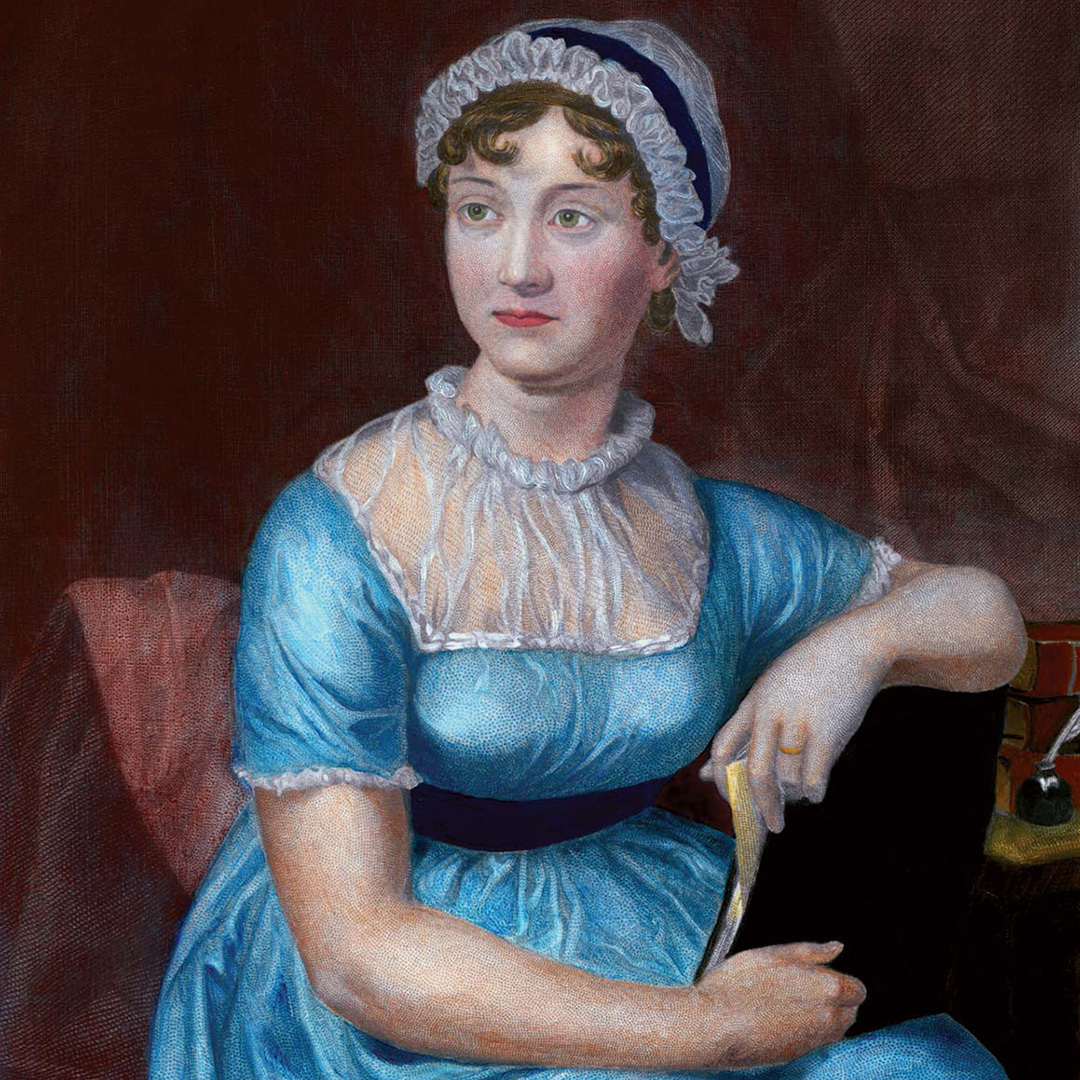
Jane Austen + Pride & Prejudice
Literary Manager and Dramaturg Kamilah Bush explores the life and time period of Jane Austen.

Behind the Curtain: Kate Hamill on Pride & Prejudice
Kate Hamill chats with PCS Literary Manager & Dramaturg Kamilah Bush about adapting Jane Austen, artistic inspiration, the slippery slope of AI, and the strangely complex joy of reality television.
Pride & Prejudice Discussion Questions
See it! Talk about it! Discussion questions for Kate Hamill's Pride and Prejudice provided by Trinity Repertory Theater.
Kate Hamill's Pride & Prejudice: A Synopsis
A brief synopsis of Kate Hamill's theatrical adaption of Jane Austen's Pride and Prejudice by Jessica Hatem Lanman with the permission of Trinity Repertory Theater.
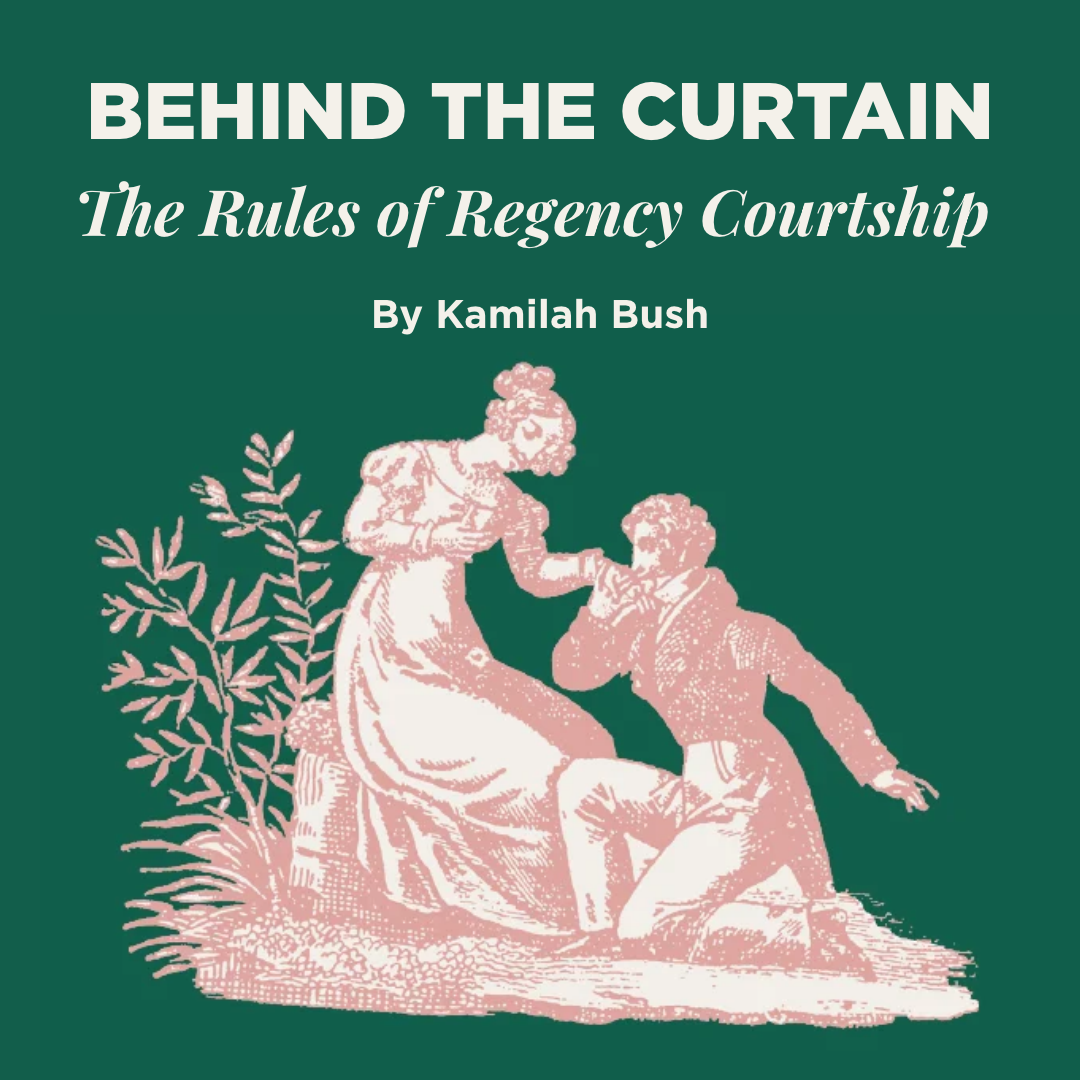
Behind the Curtain: The Rules of Regency Courtship
PCS Literary Manager & Dramaturg Kamilah Bush on the rules of marriage and romance during the Regency era.
Kate Hamill's Pride & Prejudice: A Synopsis
A brief synopsis of Kate Hamill's theatrical adaption of Jane Austen's Pride and Prejudice by Jessica Hatem Lanman with the permission of Trinity Repertory Theater.
Pride & Prejudice Discussion Questions
See it! Talk about it! Discussion questions for Kate Hamill's Pride and Prejudice provided by Trinity Repertory Theater.
Current & Upcoming

BIPOC Affinity Night: Pride & Prejudice
Join us for our BIPOC Affinity Night for Pride & Prejudice! Enjoy complimentary beverages from Deschutes Brewery, local vendors on our mezzanine, and live music from local R&B act West Note. A free pre-show event :)
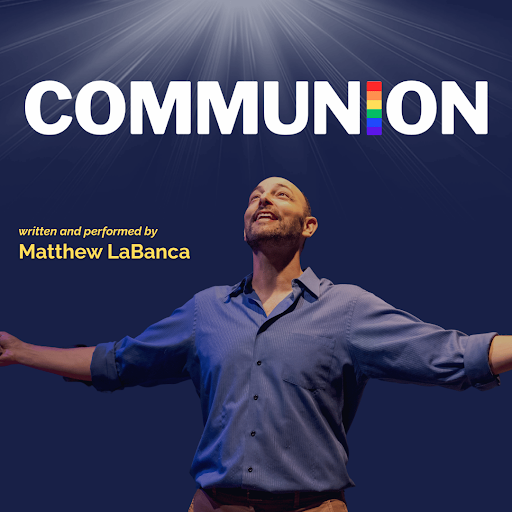
COMMUNION by Matthew LaBanca
Fired by the Catholic Church for marrying his husband, Matthew LaBanca transforms his true story into a powerful evening of music, humor, and hope.
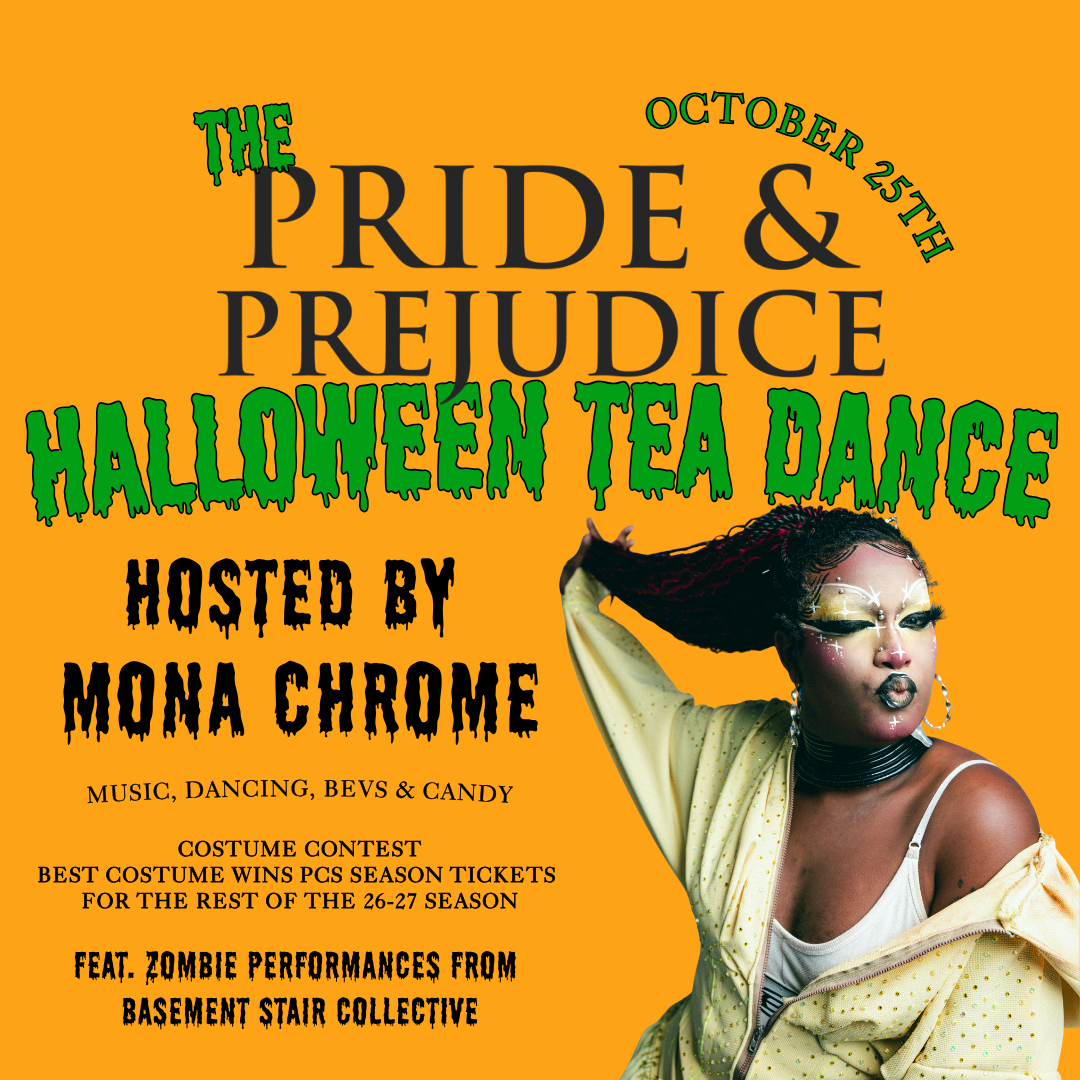
PCS Presents: The Pride & Prejudice Halloween Tea Dance
We are throwing a Halloween themed Tea Dance!
Pride & Prejudice is closing and being taken over by zombies looking to whet their appetite before Halloween. Part costume party - Part Halloween Celebration, Part Regency era courting ritual, All afternoon discotheque tea dance vibes. End your weekend on a spooky note with a somewhat civilized if not undead costume dance party.
Regency era and/or Zombie attire encouraged.
Hosted by the fabulous Mona Chrome.
Encore! Emerald Anniversary
Join us for an unforgettable evening celebrating 20 years at The Armory.
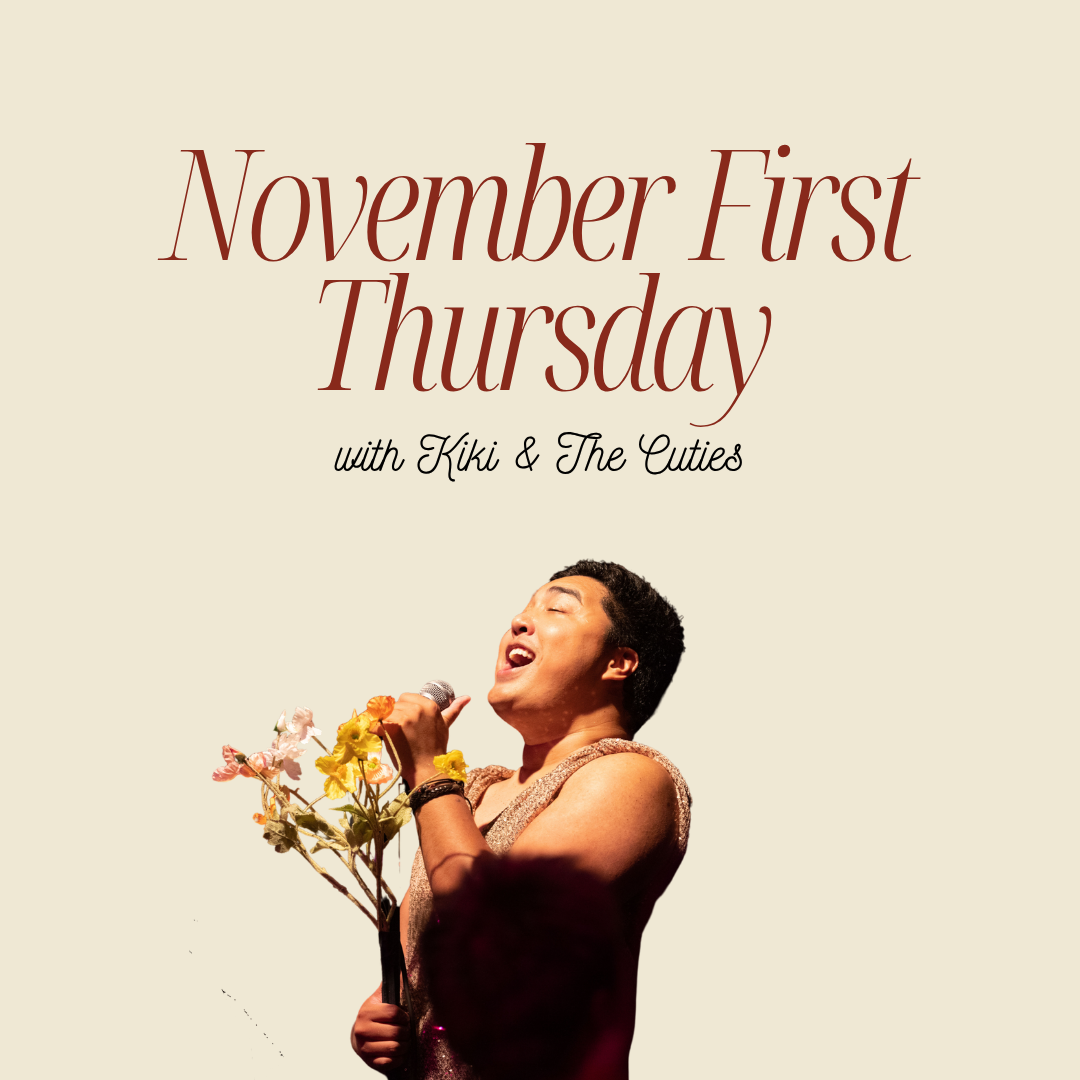
November First Thursday with Kiki & The Cuties
Our final First Thursday of the calendar year is going to be a special one! Enjoy live music from local act Kiki & The Cuties, our gallery exhibit Then. Now. Next. 20 Years at The Armory, and of course grab yourself a complimentary beer courtesy of Deschutes Brewery. Doors at 5PM, see ya there!!
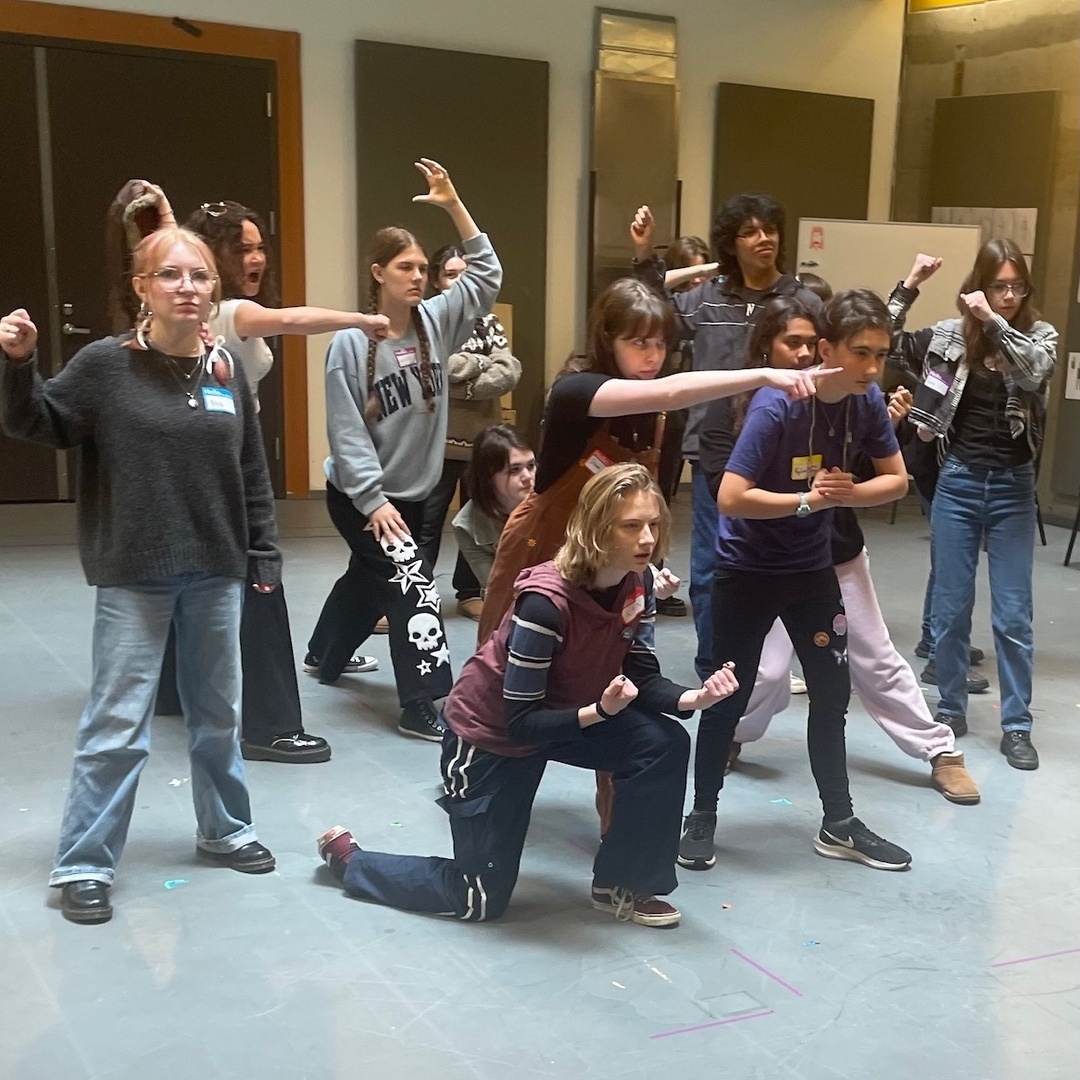
PCS Teens: Fall Improv Classes
Through fun games, acting lessons, and spontaneous character creation these classes will unlock your inner creative genius and give you the chance to get out of your comfort zone in a fun and safe environment.
Portland Center Stage is committed to identifying & interrupting instances of racism & all forms of oppression, through the principles of inclusion, diversity, equity, & accessibility (IDEA).
Season Superstars




Season Supporting Sponsors


Season Producing Sponsors