

Behind the Curtain: The History Behind the Horror
THE STRANGE ORCHID
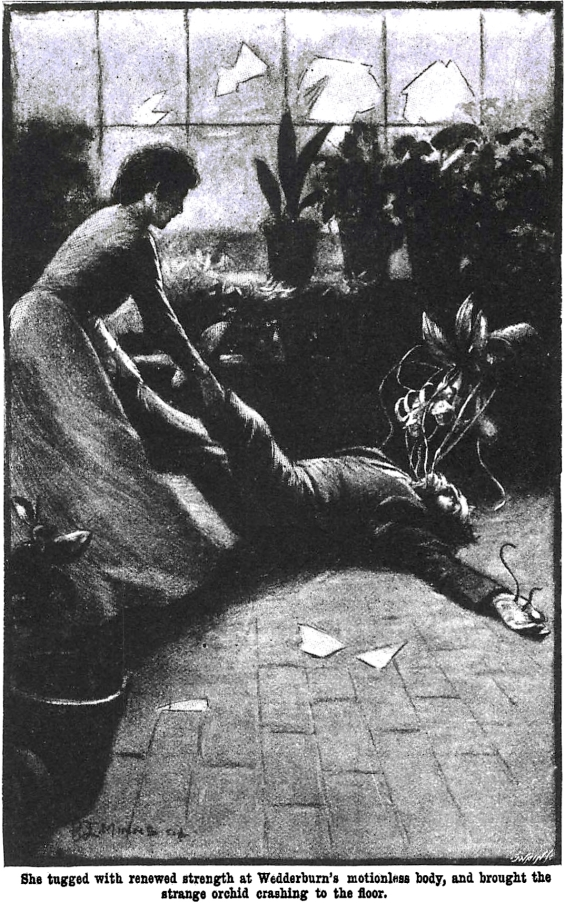
Illustration from H.G. Wells’ “The Flowering Of The Strange Orchid” from Pearson’s Magazine, 1894.
The origins of Audrey II date back to 1894, when English novelist, journalist, sociologist, and historian H.G. Wells published The Strange Orchid. Wells, the son of domestics, grew up poor but received a scholarship to The Normal School at age 18 where he studied biology. With this knowledge, Wells went on to be one of the pioneers of science fiction — his works not only shaping the genre but our future as well. The writings, including his most famous The War of the Worlds, predicted things like the cell phone, emails, genetic engineering and, most hauntingly, nuclear weapons.
The Strange Orchid, (sometimes also called The Flowering of the Strange Orchid) published even before his first novel, is a roughly 3000 word short story that follows a “shy, lonely, rather ineffectual man” referred to only as Winter-Wedderburn. Winter-Wedderburn lives as an orchid collecting bachelor with his distant cousin and housekeeper. Hoping for some excitement in his life after lamenting to her “Nothing ever happens to me”, he goes to a plant show to buy an exotic orchid. This orchid was discovered by a scientist who was found dead next to it with “every drop of blood…taken out of him”. His cousin, immediately skeptical of the plant, later finds Wedderburn lying unconscious next to it:
"He was lying, face upward, at the foot of the strange orchid. The tentacle-like aerial rootlets no longer swayed freely in the air, but were crowded together, a tangle of grey ropes, and stretched tight, with their ends closely applied to his chin and neck and hands.
She did not understand. Then she saw from one of the exultant tentacles upon his cheek there trickled a little thread of blood. With an inarticulate cry she ran towards him, and tried to pull him away from the leech-like suckers. She snapped two of these tentacles, and their sap dripped red.”
The story ends with Wedderburn’s cousin saving his life and presumably destroying the plant. The final line reads:
"But Wedderburn himself was bright and garrulous upstairs in the glory of his strange adventure."
H.G. Wells’ story published in 1894, inspired John Collier’s own Audrey II-esque murderous plant story entitled Green Thoughts. In this 1932 story, a mild-mannered orchid enthusiast Mr. Mannering receives an exotic bloom from a friend who died on the expedition to retrieve it. The plant eats, and thereby absorbs the memories of first a cat, then Mannering’s cousin, and then Mannering himself — displaying their heads on its blooms. Mannering’s fortune seeking nephew inherits the plant, discovers its carnivorousness and destroys it.
Green Thoughts was followed in 1956 by Arthur C. Clarke’s The Reluctant Orchid. This variation on the man-eating plant story is narrated by an unnamed person who was told the tale by a friend of the central character — Hercules Keating, an “inoffensive little clerk” who “had very little social life, and all his real friends grew in pots in a humid conservatory at the bottom of his garden”. Hercules lived with his only relative, his aunt Henrietta who “rightly despised me as the weaker sex”. When he gets a rapidly growing plant that grew taller than 4 foot 9 Hercules, with vibrating tentacles, he reads H.G. Wells’ story and decides to feed the plant raw meat. Realizing that he could use the plant to his advantage, Hercules plots to murder his aunt but the plant is instead tamed by the formidable Henrietta, leaving Hercules a “broken man”.
THE PASSIONATE PEOPLE EATER
These three stories — The Strange Orchid, Green Thoughts and The Reluctant Orchid — served as the base for filmmakers Roger Corman and Charles B. Griffith’s 1960 B-movie originally titled The Passionate People Eater. This horror-comedy film, eventually released under the title The Little Shop of Horrors, is narrated by the police officers involved in the story and follows the goings-on in Gravis Mushnik’s flower shop in skid row. His employee, Seymour, shows him a small plant that he cultivated from “Japanese gardener over on Central Avenue” which he has named Audrey Jr., after his crush, the only other shop employee. Feeding on Seymour’s blood, Audrey Jr. grows, gains the ability to speak, and attracts new business to Mushnik’s shop. The publicity leads to a visit from the Society of Silent Flower Observers of Southern California that announces that Seymour will receive a trophy and that there will be a ceremony when the plant's buds open.
When Seymour eventually tires of feeding the plant blood, he throws a rock in frustration and accidentally kills a railroad worker. He feeds his victim to the plant but is secretly observed by Mushnik. The next day, Seymour goes to the dentist for a toothache and is attacked by the dentist named Farb. Seymour kills Farb with a drill and then feeds him to Audrey Jr. Mushnik stays in the shop overnight in hopes to keep more people from harm, but a burglar breaks in and Mushnik defends himself by feeding him to Audrey Jr. A pair of cops start to investigate the growing disappearances.
Finally, worried about his growing relationship with Audrey, Seymour tells Audrey Jr. he won’t feed it anymore. The plant hypnotizes Seymour and he goes out and kills a sex worker to feed to Audrey Jr. The pair of policemen attend the blooming ceremony event at Mushnik’s shop and when the buds open, each flower contains the head of Audrey Jr. 's victims. Seymour flees, but later returns to the flower shop and climbs inside of Audrey Jr. with a kitchen knife. The plant wilts, but one final bloom opens to reveal Seymour’s face as he cries his final words: I didn’t mean it.
This film, which cost $28,000 to produce (a bit more than $320,000 today), was filmed in less than a week on the set of another horror film, Bucket of Blood. The cast, composed of actors from other Corman B-Movies, featured a young Jack Nickleson in a small role. The skid-row winos on set were real houseless people that producers paid $0.10 to appear as extras. According to the AFI Catalogue:
"The DV review described the film as a “serviceable parody of a typical screen horror...[it is] one big ‘sick’ joke, but it’s essentially harmless and good-natured and there’s an audience for it. [The] film comes up with several good laughs via its wild disregard for reality and its wacky characterizations....Horticulturalists and vegetarians will love it.”
STAGE & SCREEN
In 1960, a 10 year old Howard Ashman and his sister Sarah saw Corman and Griffith’s film. Years later, he wrote a script based on the film called Candy Shop. “Yes,” he said of this, “I was a teenaged plagiarist.” After the success of his 1979 collaboration with Alan Menken, Rosewater, he invited several people over to Sarah’s house to hold a betamax screening of the 1960 film. That night he convinced everyone that they should turn the movie into a musical.
The initial workings on the script were nearly identical to the film’s plot and the songs were sonically closer to Golden Age musical comedies but eventually Ashman suggested that the songs take on a different tone — the musical could be “the dark side of Grease.” The script always featured an Audrey puppet, made by Sesame Street puppeteer Martin P. Robinson, that grew over the course of the evening into a larger more menacing antagonist but subsequent drafts took her from an earthly crossbred plant to an alien from outer space, from a high pitched voice to a deep voiced soul singer, and from Audrey Jr. to Audrey II — because two is easier to rhyme than junior.
With Audrey II’s transformation complete, the small role of the dentist beefed up into Oren, the music genres pushing into R&B, Doowop and early Rock’n’Roll, and the dropped The from the title, Little Shop of Horrors opened at the WPA Theatre in 1982 to rave reviews. It starred Lee Wilkof as Seymour, Ron Taylor as Audrey II, and Ellen Green as Audrey. The New York Times review published May 30, 1982 reads in part:
''Little Shop of Horrors,'' at the WPA Theater, drawn from a lowbudget 1960 horror movie by Roger Corman, is a Faustian musical about a timid clerk who sells his soul to a man-eating cactus. Admittedly this is rather a rarefied idea for a musical comedy, but the evening is as entertaining as it is exotic. It is a show for horticulturists, horror-cultists, sci-fi fans and anyone with a taste for the outrageous."
Though the reviewer Mel Gussow called Audrey II a cactus, his take on the musical was held by audiences and critics alike. The show transferred not only to the larger Orpheum Theater, it also boasted opening nights in Los Angeles and London while also running for 5 years Off Broadway. It received the Drama Desk Award for Outstanding Musical.
Four years later, after Martin Scorsese’s 3D adaptation of the musical failed to launch, director Frank Oz brought Little Shop to the big screen. This $25 million enterprise starred Rick Moranis, two years after Ghostbusters, as Seymour, Levi Stubbs, of The Four Tops, as Audrey II and the newly minted star Ellen Green as Audrey.
Many things were reworked for the film, including shortened songs, lengthened storybeats, new puppets made by Jim Henson’s proteges, and a reworked ending. The play’s original ending tested poorly with audiences and with producer David Geffen. Oz describes the change as "dissatisfying" but that he “had to do it.” The most award winning change, however, was the addition of the song “Mean Green Mother from Outer Space” which earned Ashman and Menken an Oscar nomination for Best Original Song. This nomination marked the first song in the category to feature profanity and to be sung by the movie’s villain. The film was also nominated for Best Visual Effects at the Academy Awards, and Best Motion Picture – Musical or Comedy and Best Original Score – Motion Picture at that year’s Golden Globes.
Preview Image Details
(information about the image that accompanies links to this page)
Illustration from H.G. Wells’ “The Flowering Of The Strange Orchid” from Pearson’s Magazine, 1894.
More about Little Shop of Horrors:
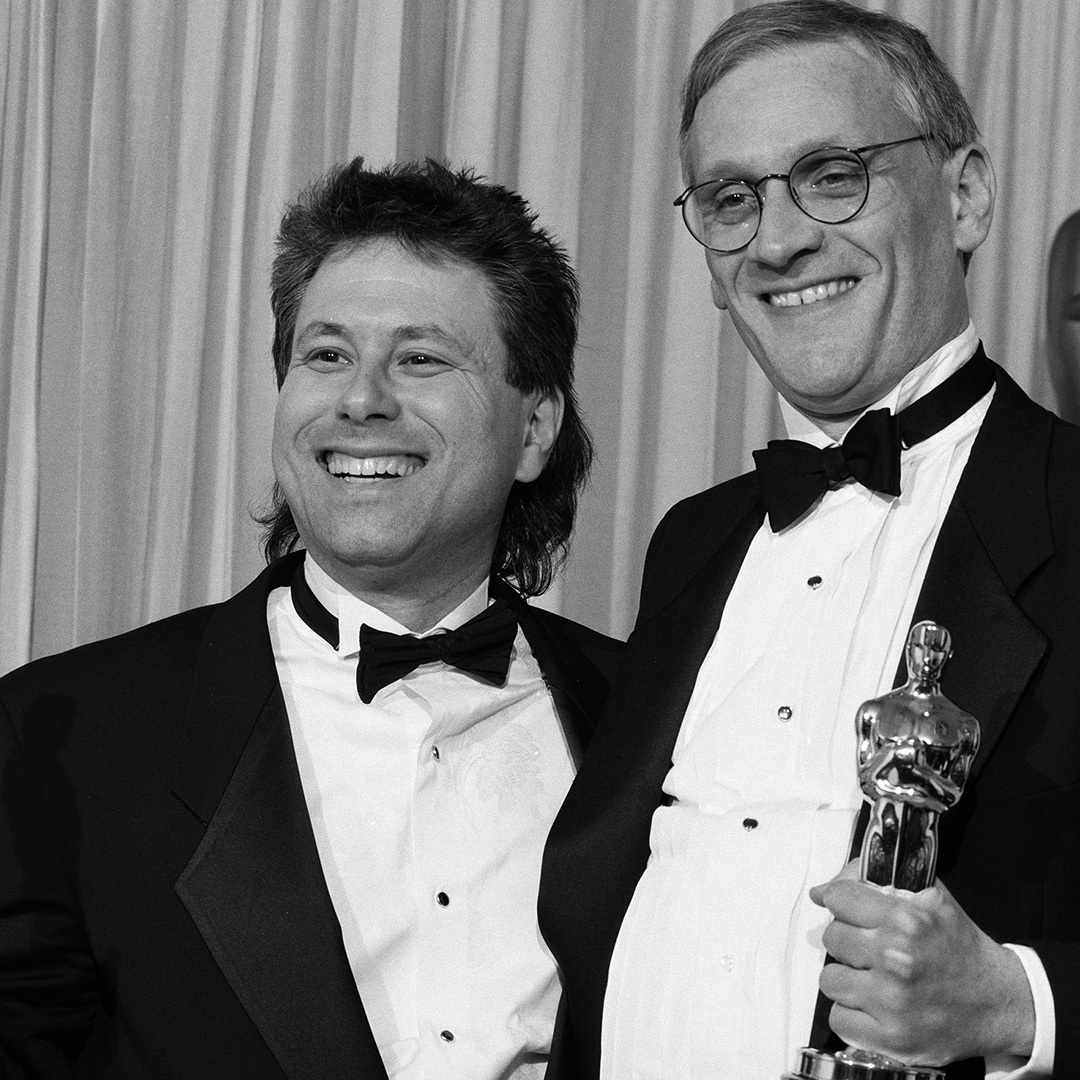
Little Shop of Horrors Creators: Ashman & Menken
Short biographies on the creators behind Little Shop of Horrors, Howard Ashman and Alan Menken.
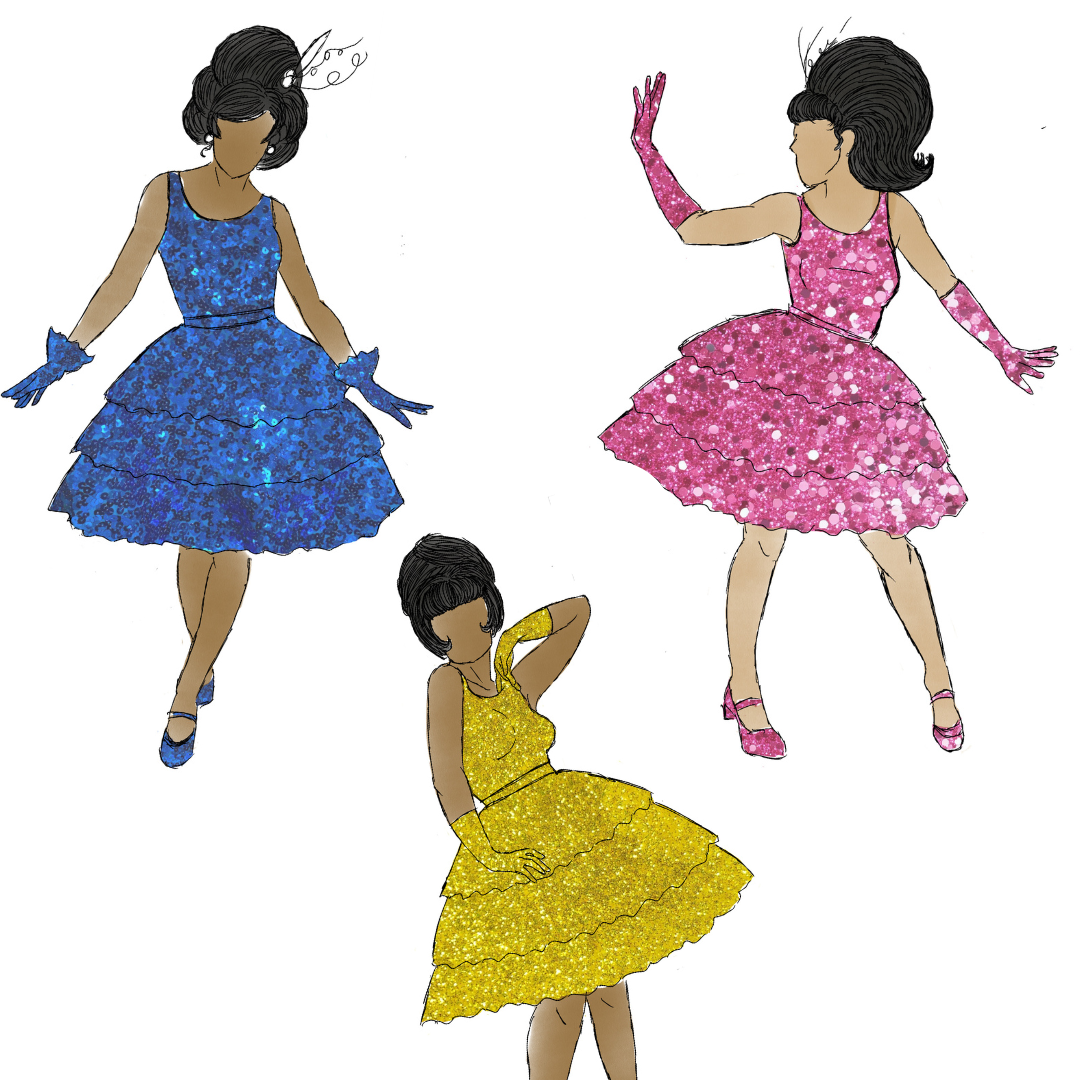
Little Shop Themes, Styles, & Genres
A peek at some of the real life inspirations behind themes found in Little Shop of Horrors.
Current & Upcoming
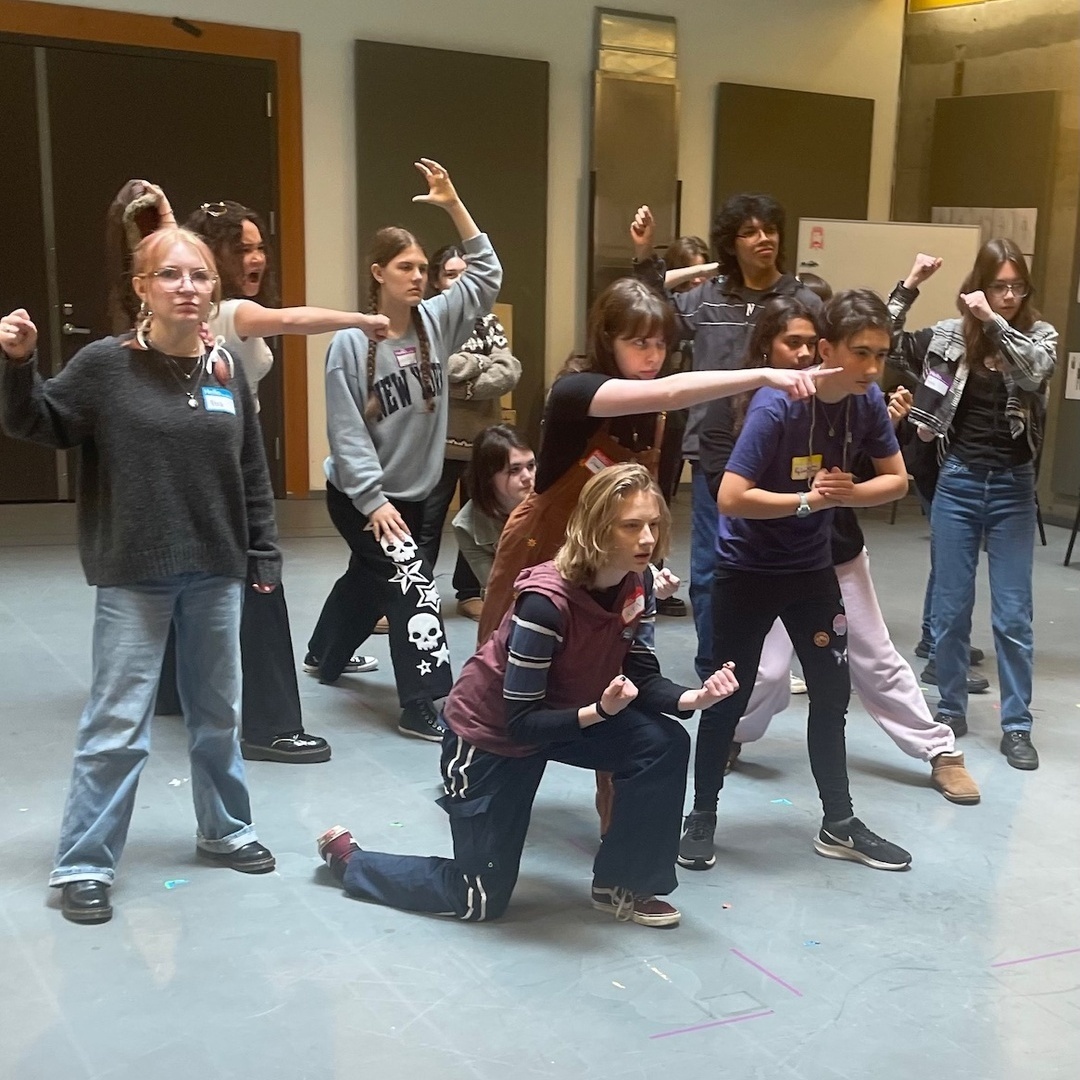
PCS Teens: Fall Improv Classes
Through fun games, acting lessons, and spontaneous character creation these classes will unlock your inner creative genius and give you the chance to get out of your comfort zone in a fun and safe environment.
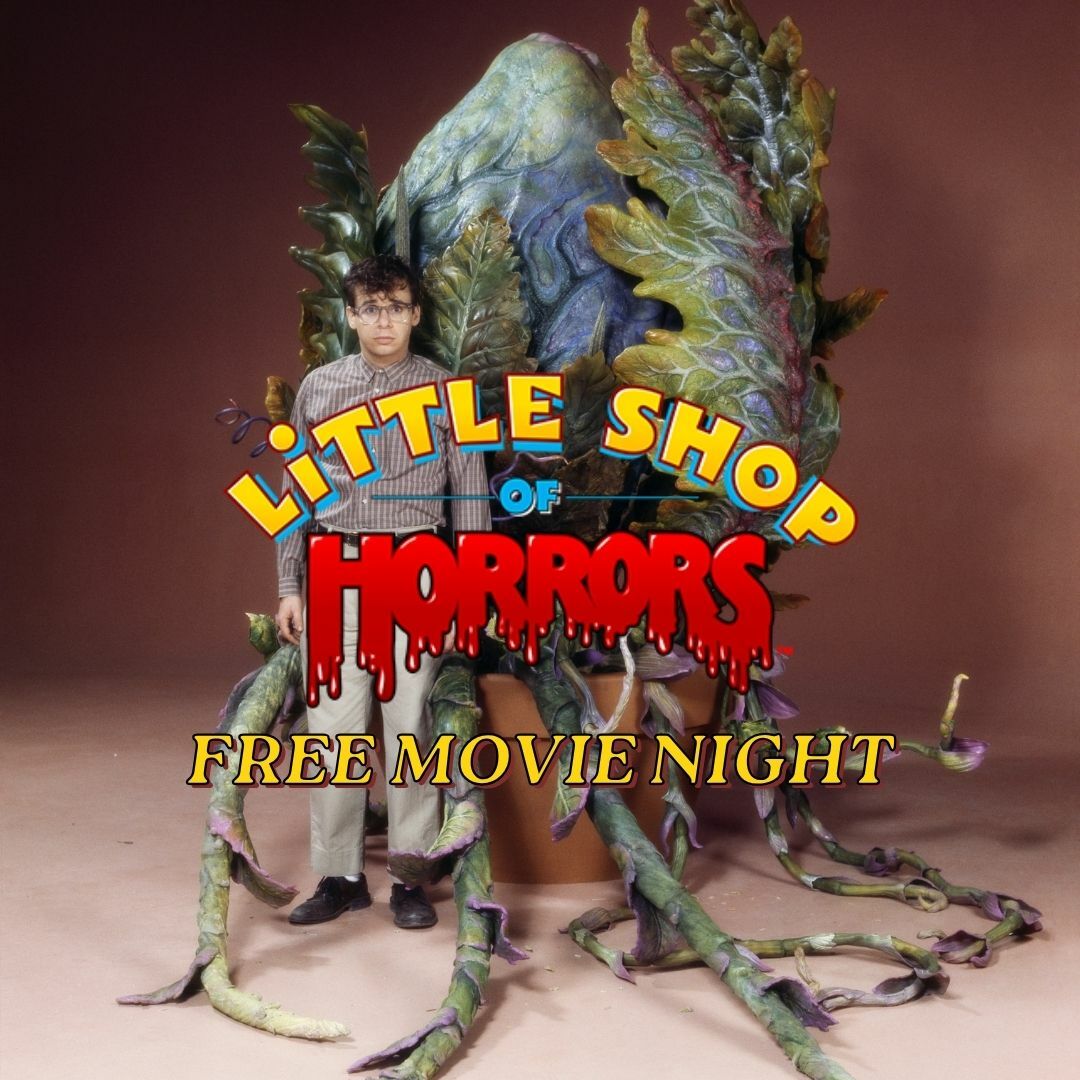
PCS Movie Night: Little Shop of Horrors (1986)
Suddenly we're seeing more Little Shop of Horrors!! Join us in the Ellyn Bye Studio for the 1986 rendition as we prep for our main stage production. This is a FREE Movie Screening. Our bar will be open before the show with both alcoholic and NA beverages. You are ENCOURAGED to bring your own candy. That's right, BYOC (just no popcorn. Popcorn will be confiscated!). Doors at 6PM, movie at 6:30PM sharp. See ya there!
BIPOC Affinity Night w/ MexicaTiahui Aztec Dance Group
Join us before Little Shop of Horrors for a special pre-show dance performance from MexicaTiahui Aztec Dance Group. There will be drinks, snacks and fun for the whole family! Doors will open at 5:30PM, performance at 6PM.
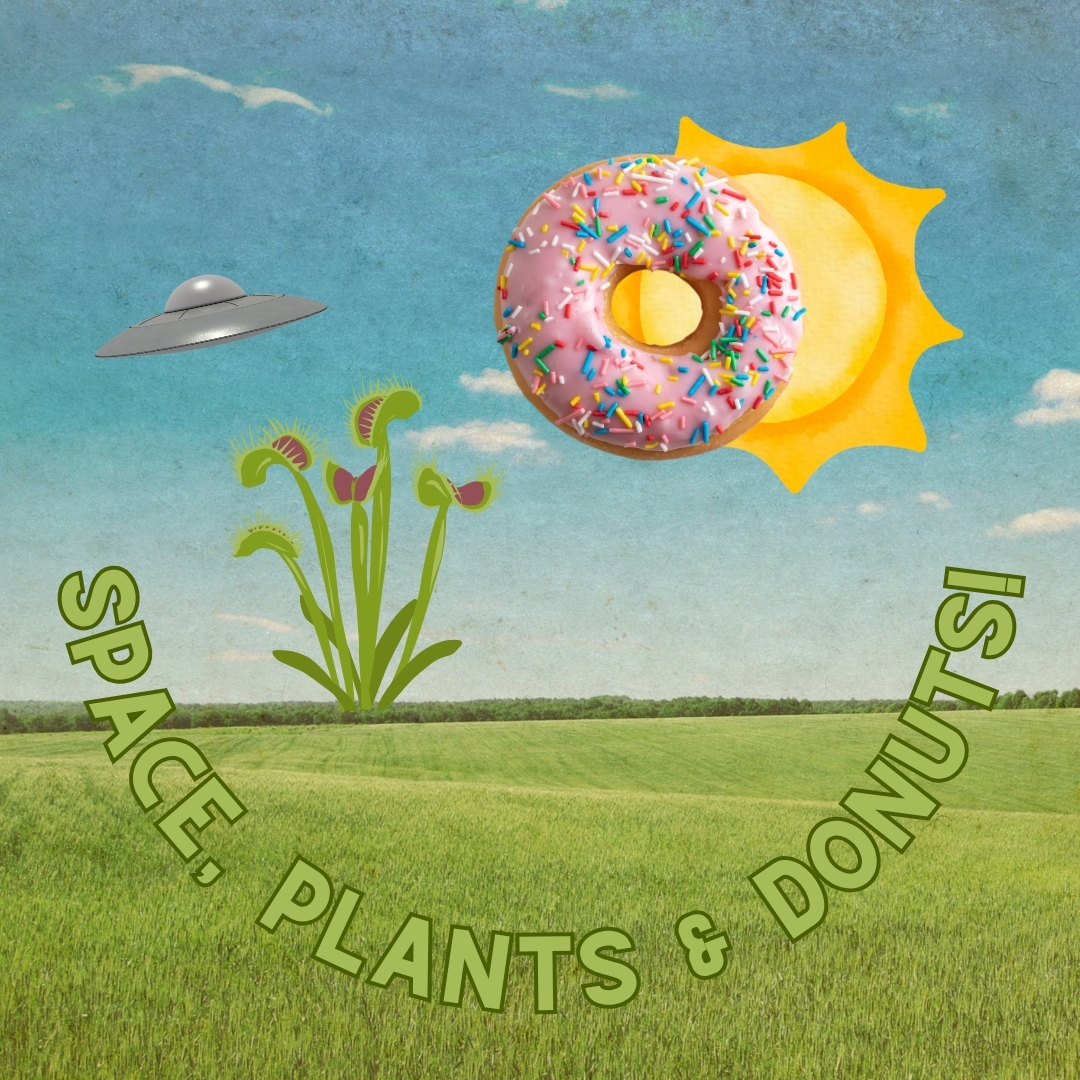
Space, Plants & Donuts!
Join us at our free pre-show event on November 29th for hands on presentations from Portland Carnivorous Plants & Rose City Astronomers! Learn about solar eclipses, extra terrestrial life, meet some real-life carnivorous plants..and heck..have a free donut while you do it! And of course, make sure to catch our 2PM matinee of Little Shop of Horrors.
PCS Presents: A Puppet Making Workshop
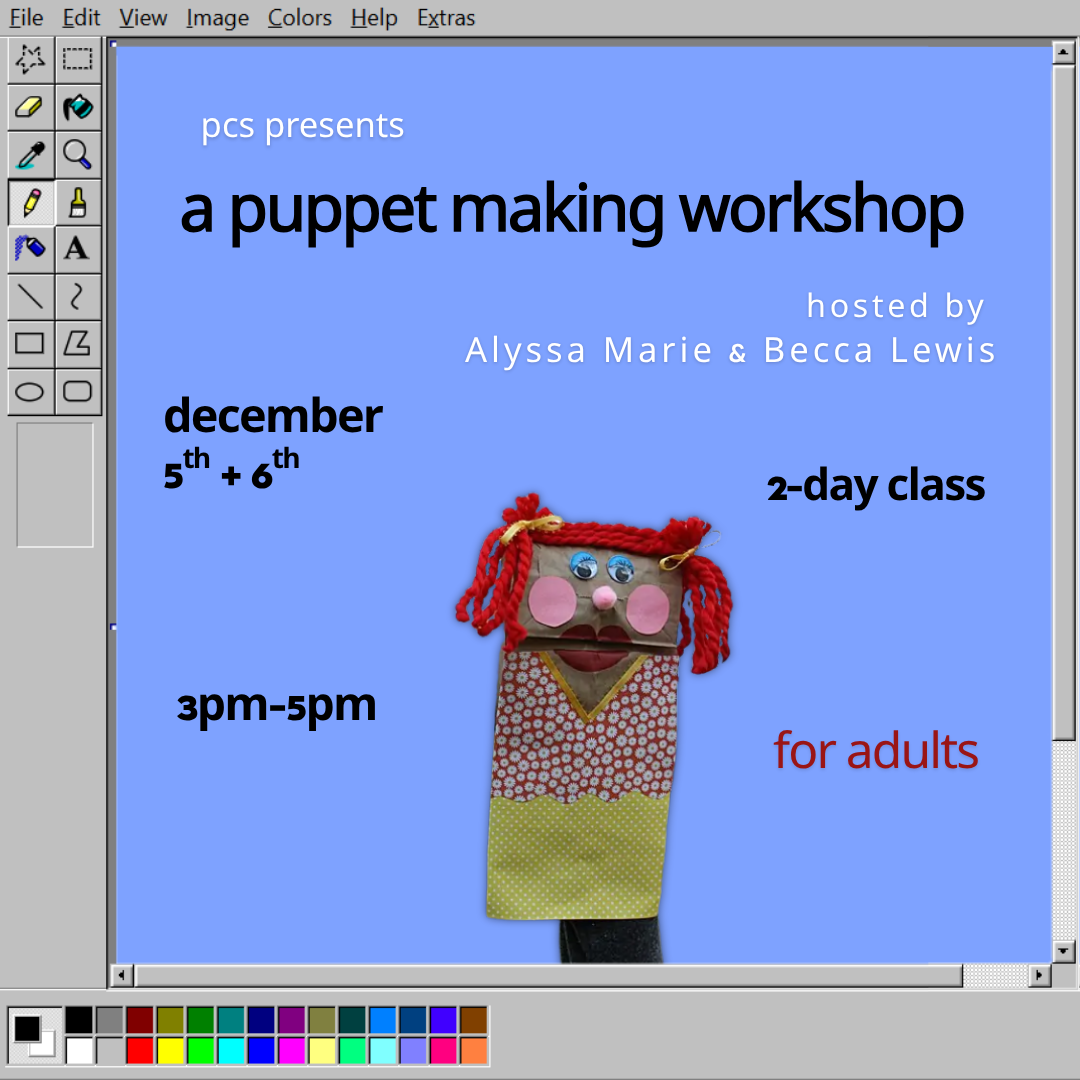
Join us on December 5th & 6th from 3PM to 5pm for a two-day puppet crafting extravaganza!! Hosted by Alyssa Marie & Becca Lewis, the brilliant designers, builders, brains and puppet team behind PCS' Audrey II in Little Shop of Horrors. PCS welcomes you to A Puppet Making Workshop. If you've ever had the desire to create something with a life of its own, this is it!! Bring a friend, meet a friend...or make a friend! We've got you covered :) Ages 18+
Improvisation Classes for Beginners
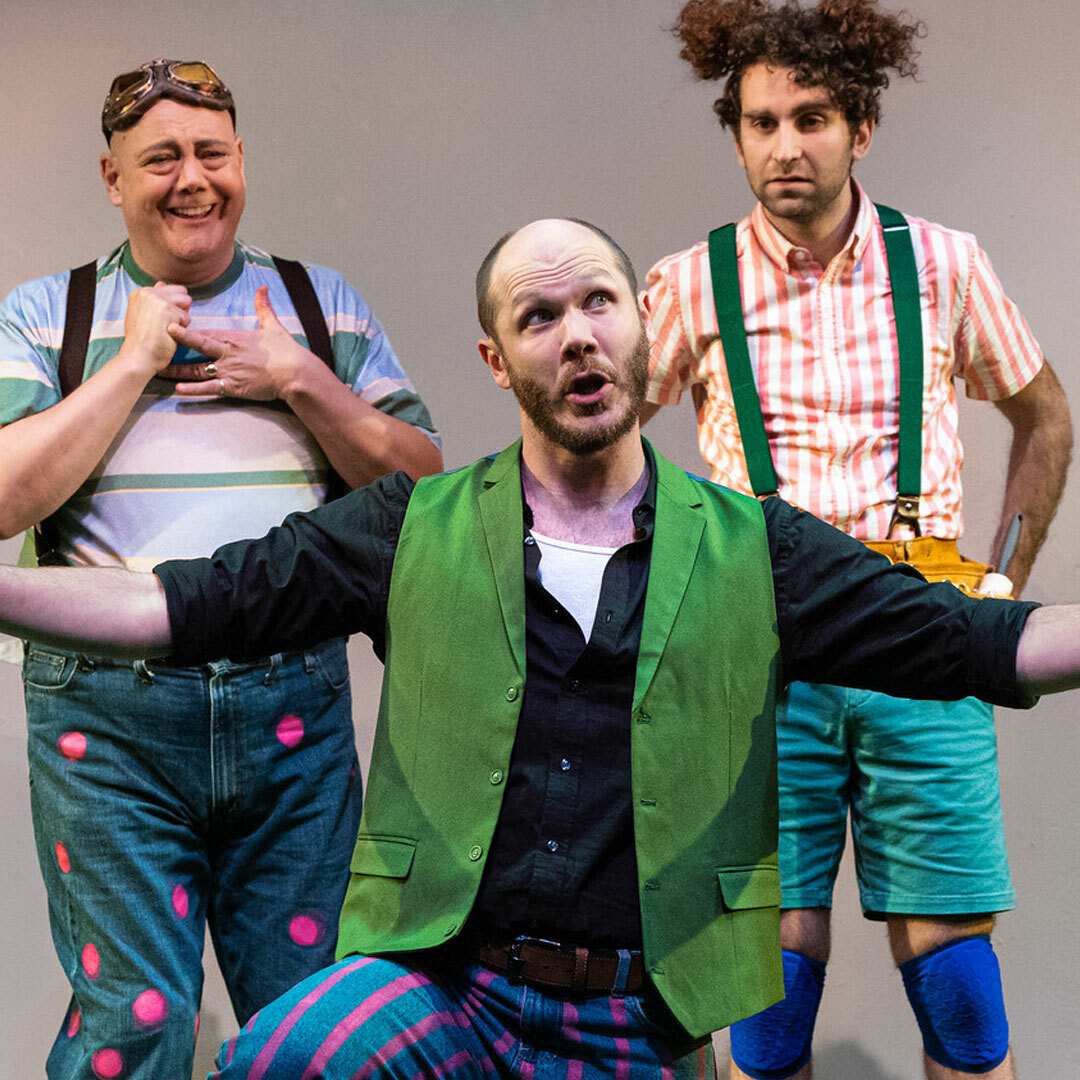
Whether you're looking to get more confident in social situations, think quicker on your feet, or get in touch with your imaginative side, these "one-off" improv classes will set you on the path to success!
Portland Center Stage is committed to identifying & interrupting instances of racism & all forms of oppression, through the principles of inclusion, diversity, equity, & accessibility (IDEA).
Season Superstars




Season Supporting Sponsors


Season Producing Sponsors